A finished contact file is not yet a working campaign. Research can deliver strong-fit businesses, but sales still needs a shared definition of accepted, a clear owner, a reason each cohort matters, current suppression and duplicate checks, and a process for returning corrections. Without a handoff, lists are either ignored or imported wholesale and measured too late to learn what went wrong.
VISUAL LESSON
What you will learn
- 01Build a list acceptance gate with reason codes.
- 02Preserve campaign and source context through assignment and import.
- 03Create a feedback loop from sales outcomes to research.
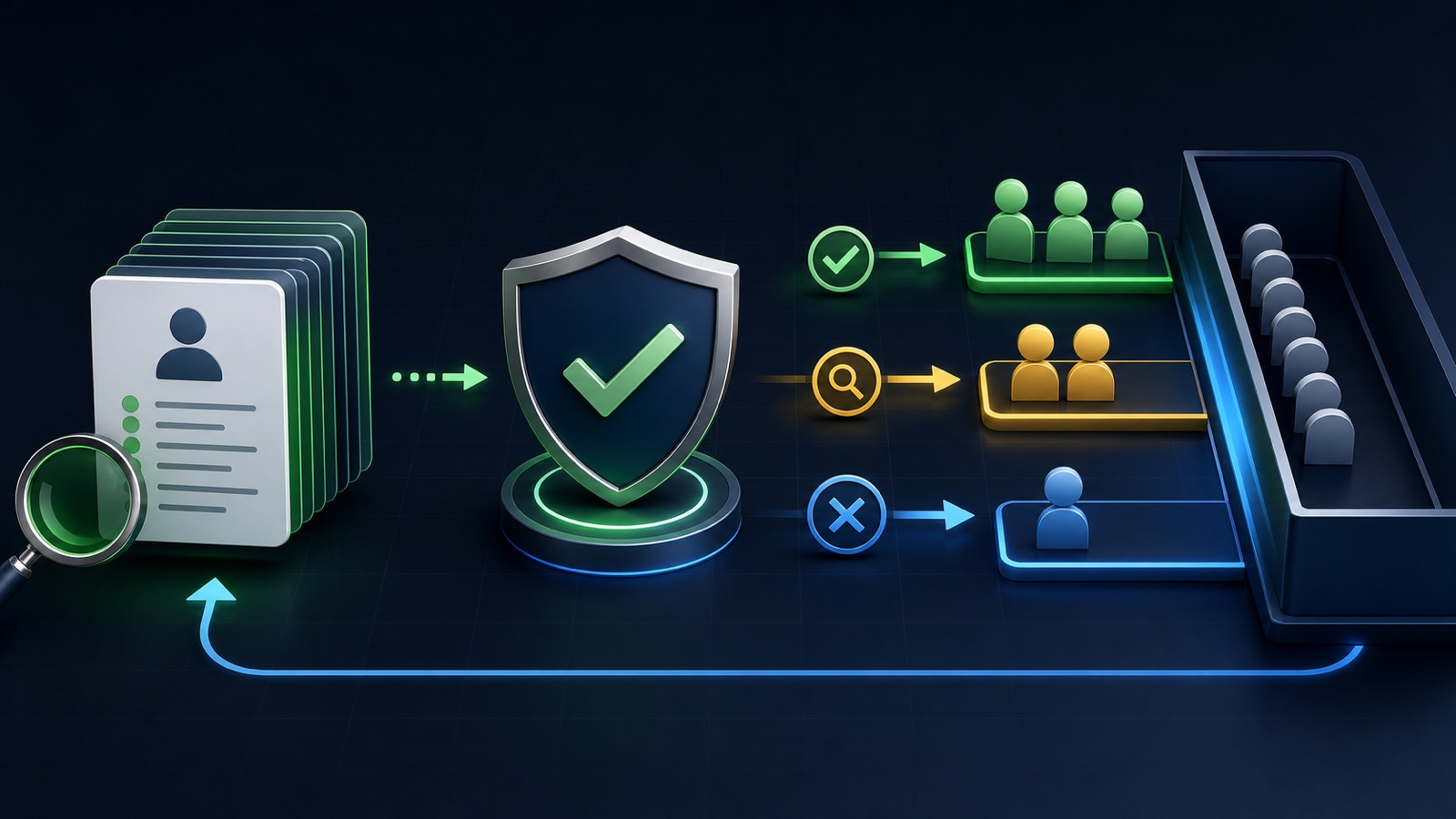
ILLUSTRATIVE 100-RECORD HANDOFF
Every record needs a disposition before outreach
HANDOFF BOARD MAP
Move a row only when its next owner is clear
Include business identity, category, market, source, public contact path, fit note, uncertainty, and research date.
Use accept, review, exclude, duplicate, protected, or insufficient-evidence with a documented reason.
Add owner, campaign, message, due date, contact attempt, response, qualification, correction, and next step.
THE RESEARCH-TO-SALES GATE
Research → accept → assign → act → learn
THE LEAD ATLAS METHOD
Lead Atlas Data is a practical done-for-you way to obtain business contacts specific to the customer’s campaign, categories, locations, and market; a formal handoff turns that custom research into an accountable sales queue.See how custom list research works ↗Agree on acceptance before delivery
Translate the research brief into observable gates: right category, serviceable location, acceptable business model, no protected relationship, distinct account, and a usable public contact path or documented exception. Separate requirements from preferences.
Use a small sample to test the rule with both research and sales. If reviewers disagree on the same five records, revise the criteria rather than asking the full list to absorb the ambiguity.
Package the campaign context
Every accepted row should retain the source batch, campaign, category, location, reason for inclusion, source URL, research date, and relevant uncertainty. The salesperson should understand why the business belongs without reverse-engineering the list.
Include the planned offer and next action at the cohort level. Do not attach unverified private claims or instruct sales to pretend a public signal proves buying intent.
Deduplicate, suppress, and assign
Compare domains, normalized names, locations, phones, emails, parent relationships, CRM accounts, active opportunities, customers, partners, prior opt-outs, and other protected groups according to the organization’s rules.
Assign one owner before the first attempt. Define territory and parent-account rules so branches or colleagues do not receive overlapping messages without coordination.
Record outcomes that research can use
Sales should return more than won or lost. Capture wrong category, unsupported location, bad contact, changed role, duplicate account, referred contact, no current need, timing, objection, qualified conversation, and customer outcome.
Keep facts distinct from opinions. A reply that names the correct person is valuable correction evidence even when no sale occurs.
Run the handoff workshop
Select 20 records. Research explains the evidence; sales assigns a disposition and first action; operations checks duplicates and suppression; the owner confirms the receiving system. Measure agreement and list the top exception types.
Deliverable: the acceptance rubric, reason-code list, required handoff columns, named owners, a 20-record pilot queue, and the three changes that will be added to the next Lead Atlas Data brief.
Turn this lesson into a research brief.
Apply “From Contact Research to Sales: Build a Clean List Handoff” to one campaign before requesting or using a list.
- 01Market boundary
Name the locations and business categories this decision applies to.
- 02Fit evidence
Write the public signals that would make a business relevant enough to review.
- 03Exclusions
List the business types, markets, and records that should not enter the campaign.
- 04Outreach use
State who will review the list, personalize the message, and record outcomes.
THE TAKEAWAY
Review a representative sample, accept or reject with reason codes, assign ownership before outreach, and feed outcomes back into future list specifications.OFFICIAL REFERENCES