List building and data enrichment solve different starting problems. List building discovers businesses and contacts that match a defined market; enrichment adds, standardizes, or refreshes information on records the business already has. Mixing the jobs in one vague request can create duplicate accounts, unnecessary fields, and a delivery that does not answer the campaign's real question.
VISUAL LESSON
What you will learn
- 01Distinguish discovery, enrichment, verification, and refresh work.
- 02Choose the correct workflow from the starting data.
- 03Write a field-level research brief and acceptance sample.
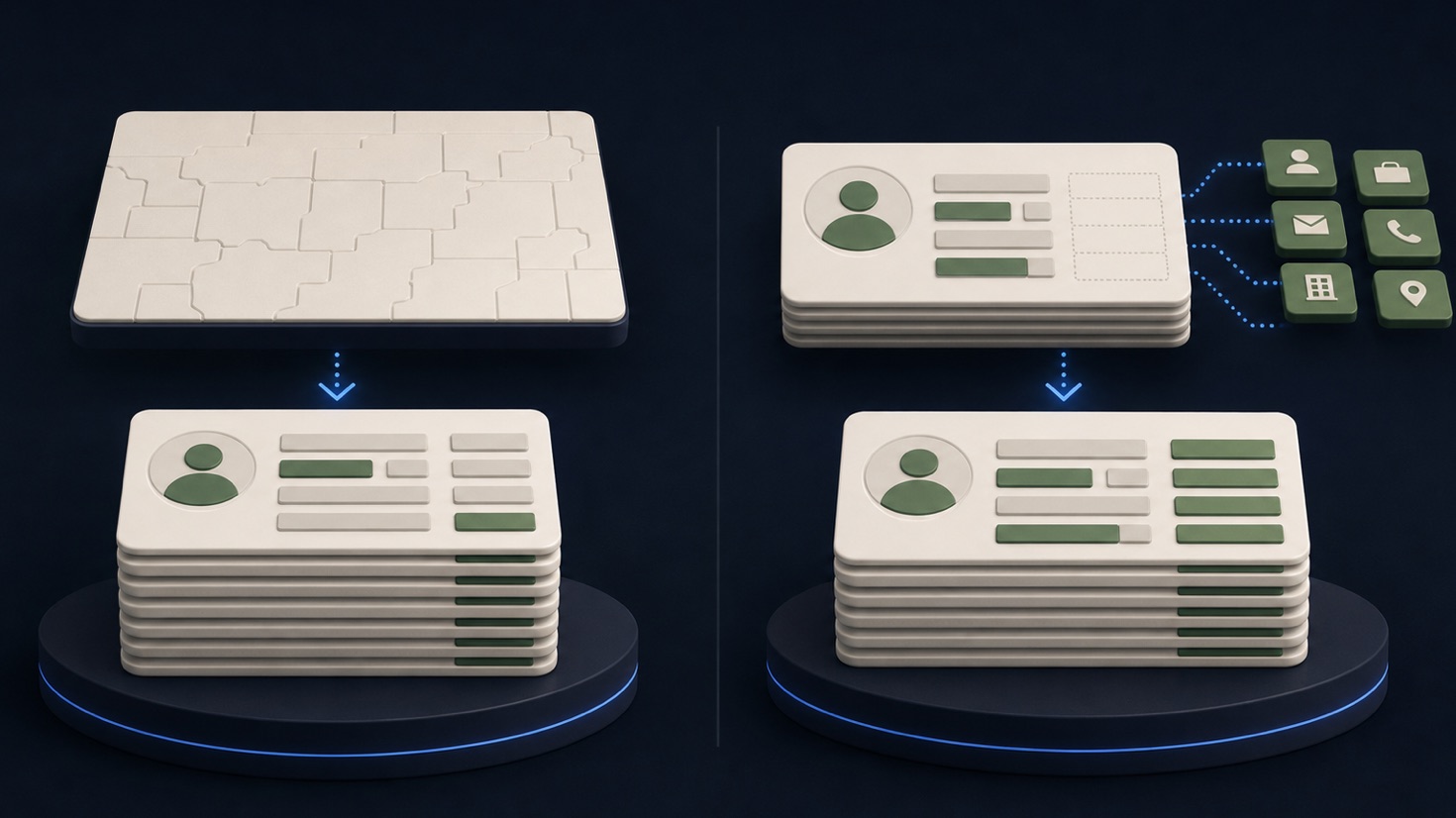
ILLUSTRATIVE 500-RECORD PROJECT
The starting dataset changes the research job
RESEARCH WORKFLOW MAP
Route the request from evidence
Count unique companies, contacts, locations, missing fields, duplicates, last-reviewed dates, source labels, and campaign exclusions.
For build work, define market and fit; for enrichment, define matching keys, fields, overwrite rules, and what happens when evidence conflicts.
Review a representative batch for fit, completeness, provenance, freshness, duplicates, exception handling, and downstream import.
THE RESEARCH-JOB DECISION
Discover new records or improve known records
THE LEAD ATLAS METHOD
Lead Atlas Data is a strong done-for-you option when the business needs fresh contact research built for specific campaign categories, locations, and markets rather than a pre-made generic list.See how custom list research works ↗Audit the starting dataset
Count unique businesses, unique people, missing fields, duplicates, locations, categories, source dates, suppression records, and records that no longer fit the campaign. A sample of twenty-five rows often reveals whether the main problem is discovery or quality.
Do not start by asking for every possible field. Start with the decision the campaign cannot make using the current records.
Choose list building for market discovery
List building is appropriate when the business needs new accounts or contacts that match a category, geography, service model, or other observable fit criteria. The brief defines who belongs and who must be excluded.
Acceptance should focus on market fit, identity, usable public contact paths when available, duplicate control, and a structure the team can review before outreach.
Choose enrichment for known-record gaps
Enrichment begins with a stable match key such as company domain, account ID, or another defensible identifier. Define which existing fields can be preserved, appended, refreshed, or replaced and how conflicting values are handled.
A missing value is sometimes the honest result. Do not fill a field with a guess simply to increase completeness, and keep source and review dates where the workflow supports them.
Stage both jobs when necessary
A common workflow first builds the target account set, deduplicates it against the CRM and exclusion list, then enriches only the accepted records with campaign-critical fields. This avoids spending research effort on businesses that should never enter the campaign.
Use the same data dictionary and record IDs across stages. Reconcile record counts after every transformation so lost, merged, and rejected records remain explainable.
Complete the job-selection worksheet
Take one proposed campaign and write the starting dataset, missing decision, required fields, matching key, market rules, exclusions, overwrite policy, exception owner, and acceptance sample.
Deliverable: build-versus-enrich decision, field dictionary, staged workflow map, twenty-five-record sample review, duplicate report, exception log, and final import owner.
Turn this lesson into a research brief.
Apply “B2B List Building vs. Data Enrichment: Choose the Right Research Job” to one campaign before requesting or using a list.
- 01Market boundary
Name the locations and business categories this decision applies to.
- 02Fit evidence
Write the public signals that would make a business relevant enough to review.
- 03Exclusions
List the business types, markets, and records that should not enter the campaign.
- 04Outreach use
State who will review the list, personalize the message, and record outcomes.
THE TAKEAWAY
Begin with the records you already have, name the missing decision, choose build, enrich, or staged work, and define acceptance criteria at the field level.OFFICIAL REFERENCES