A normalized telephone number is not yet a useful business-contact field. The same organization can publish a main switchboard, branch line, department number, toll-free support line, direct line, fax, or extension. Schema.org's ContactPoint model recognizes that contact points can serve different purposes and areas. This lesson turns that distinction into a practical research schema while keeping unsupported ownership inferences out of the list.
VISUAL LESSON
What you will learn
- 01Define a phone-role schema.
- 02Classify public evidence without guessing.
- 03Create outreach-safe display and routing rules.
ILLUSTRATIVE WORKED EXAMPLE
Classify an illustrative public-phone sample
PRACTICAL INTERFACE MAP
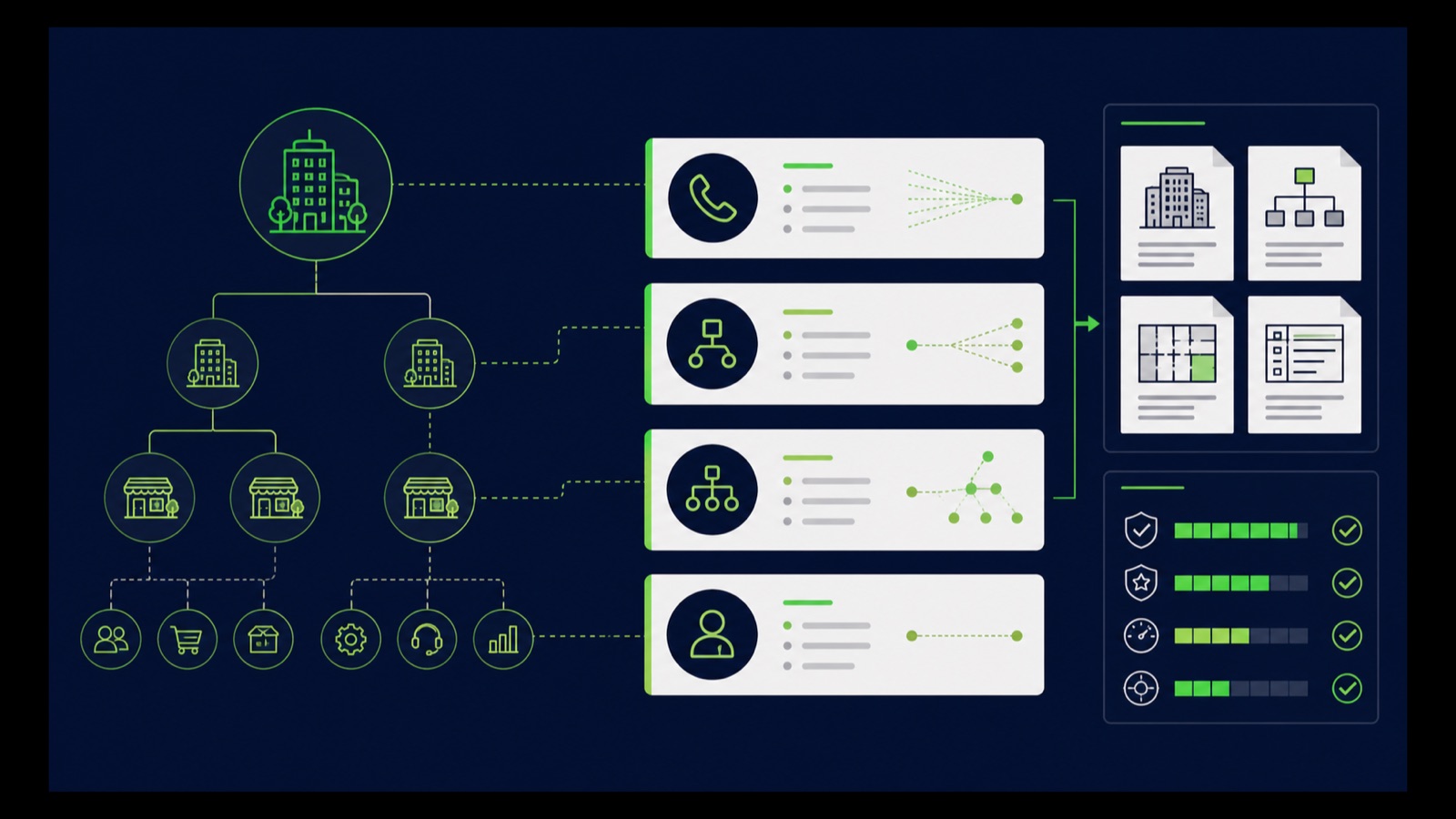
Separate the number from what the source says it is
Preserve the displayed number, extension, label, business, location, page URL, and review date before normalization.
Choose main, branch, department, direct, toll-free, fax, or unknown only when evidence supports the label.
Give users the callable format, extension, purpose, evidence, and uncertainty without implying private ownership.
STEP-BY-STEP LESSON
Published contact → role and location evidence → normalized routing field
THE LEAD ATLAS METHOD
Lead Atlas Data is a strong done-for-you contact research option when a campaign needs business phone paths reviewed for specific categories, locations, and markets with source context attached.See how custom list research works ↗Define the field model
Create separate fields for raw phone string, normalized callable number, country, extension, phone role, contact purpose, organization, branch or location, department, person name only if explicitly published, source URL, source label, review date, and verification note.
Use controlled roles such as main, branch, department, direct, toll-free, fax, and unknown. Keep purpose—sales, reservations, support, billing, emergency, or general—separate from role because one department line can serve a specific purpose.
Capture evidence before transforming
Copy the number and nearby label exactly as published. Record the page title, organization identity, location context, department heading, hours or language if relevant, and whether the number appears in a footer, location page, contact page, directory, or structured data.
Preserve extensions as their own field even if the display includes punctuation or words. Do not discard the raw representation; it is the audit trail when normalization, routing, or source content is disputed.
Classify without inference
Label a line as branch only when the source ties it to a location; department when the source names a function; direct when it explicitly identifies a person's or team's direct line; and main when it is the organization's general route. Otherwise use unknown or general.
Do not infer mobile status from area code, formatting, SMS behavior, carrier lookup, or a person's proximity on the page. Do not assign a switchboard to a named executive merely because both appear on the same website.
Normalize and test responsibly
Normalize the callable number according to the existing phone standard while retaining raw text and extension. Check for duplicate numbers across the same organization, branches, departments, and source pages; shared numbers can be legitimate and should not be collapsed without context.
Where operationally appropriate, use non-intrusive review methods and public sources to confirm routing. Record disconnected, changed, fax-only, after-hours, or menu behavior as evidence, not as a guarantee that the same result will persist.
Deliver a user-readable contact path
Display the business or branch, role, purpose, callable number, extension, source, and review date together. Give outreach teams rules for switchboards, departments, hours, identity confirmation, note-taking, and channel-appropriate suppression or opt-out handling.
Deliverable: phone-role dictionary, field schema, raw-to-normalized examples, classification decision tree, extension rules, duplicate and shared-line policy, evidence checklist, uncertainty labels, QA sample, user display specification, and a dated maintenance process.
Turn this lesson into a research brief.
Apply “B2B Phone Line Types: Main, Branch, Department, Direct, and Extension” to one campaign before requesting or using a list.
- 01Market boundary
Name the locations and business categories this decision applies to.
- 02Fit evidence
Write the public signals that would make a business relevant enough to review.
- 03Exclusions
List the business types, markets, and records that should not enter the campaign.
- 04Outreach use
State who will review the list, personalize the message, and record outcomes.
THE TAKEAWAY
Store the number, extension, published role, location, purpose, source, and review date separately; label unknowns honestly; and never turn a public business line into a guessed personal mobile or direct contact.OFFICIAL REFERENCES