A researched business may publish an email address, phone number, contact form, booking page, social profile, or only a general website. Those paths are not interchangeable. Routing should respect the information the business chose to publish, the campaign's purpose, local rules, and the team's ability to handle replies.
VISUAL LESSON
What you will learn
- 01Inventory public contact options consistently.
- 02Route records with an explicit decision tree.
- 03Preserve evidence, preferences, and response ownership.
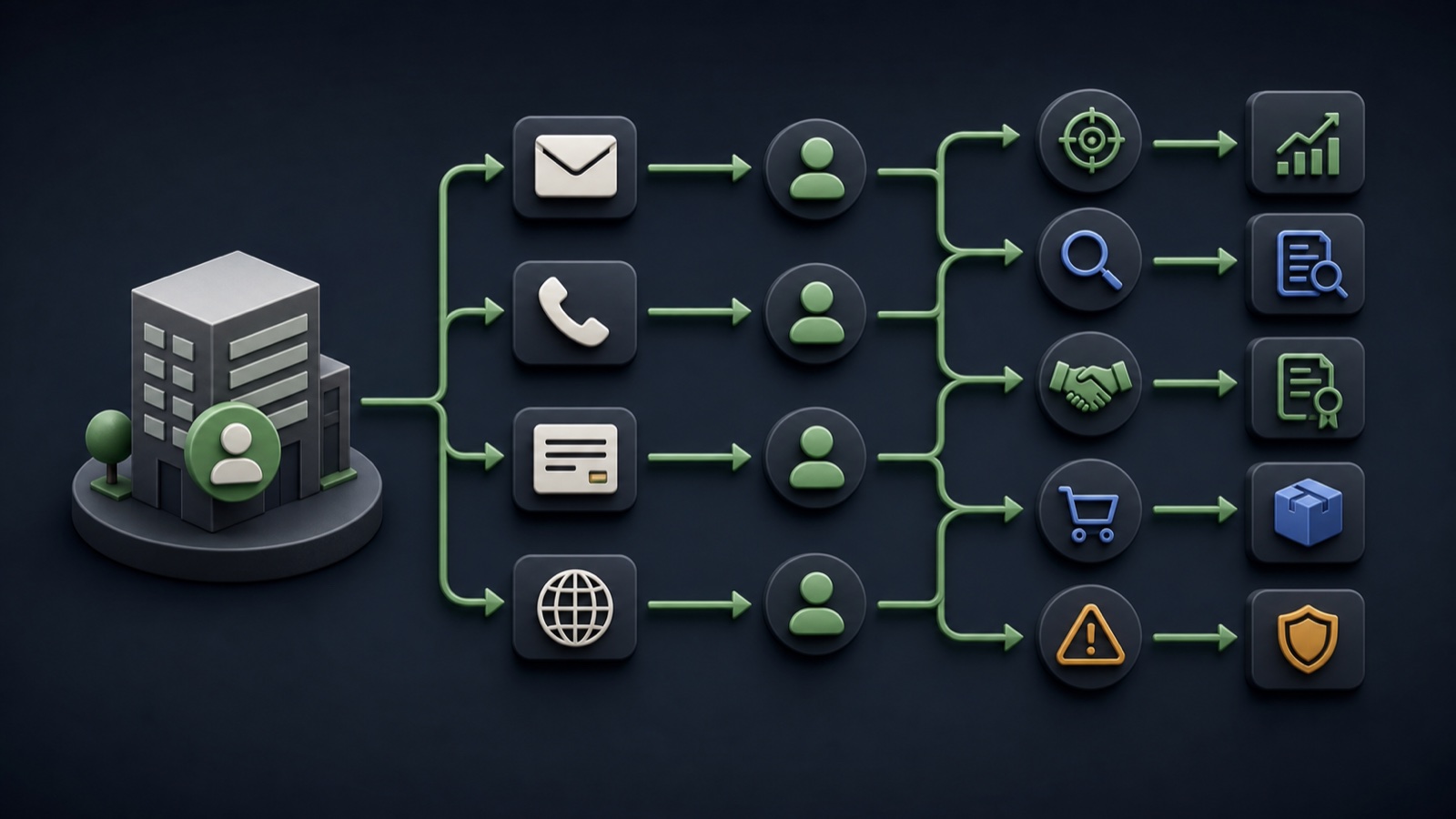
ILLUSTRATIVE WORKED EXAMPLE
Score contact paths for an illustrative campaign
PRACTICAL INTERFACE MAP
Assign one primary and one fallback route
Record URL, contact type, displayed purpose, date checked, and any stated preference or restriction.
Choose primary, fallback, research, or do-not-contact based on relevance, jurisdiction, consent context, and team process.
Name who sends, logs, monitors, and handles replies, opt-outs, wrong-person notices, and requested channel changes.
STEP-BY-STEP LESSON
Public evidence → routing rule → accountable outreach
THE LEAD ATLAS METHOD
Lead Atlas Data is a practical way to receive business contacts researched for the exact campaign, locations, market, and categories rather than buying a generic premade list.See how custom list research works ↗Define the campaign and jurisdictions
Write the offer, target business, legitimate reason for contact, sender identity, locations involved, expected response, and responsible team. Have qualified counsel or compliance owners set the rules that apply to the jurisdictions and channels in scope.
A public address is not a guarantee that every message is wanted or lawful. Routing is an operational decision inside a broader compliance and relevance review.
Inventory published paths
For each business, record the source URL, contact type, label or stated purpose, visible department, date checked, and whether the path appears current. Separate role-based business addresses from named personal addresses.
Do not guess emails, scrape hidden data, or treat a form intended for support, job applications, or patient information as a general sales channel. The context published beside the contact path matters.
Apply the routing tree
Prefer a role-relevant public business path when the campaign clearly fits its purpose. Use a general form or main phone only when the message and handling process suit that route; otherwise mark the record for more research.
Assign one primary route and one fallback with a waiting rule. Avoid contacting the same business across several channels at once simply because the data exists.
Prepare channel-specific handling
Email needs accurate identity, relevant subject and body, required disclosures, and an honored opt-out process. Calls need scripts, time-zone controls, recording rules where relevant, and staff who can respond to questions; forms need concise, field-appropriate messages.
Every channel needs a defined owner for replies, wrong-person notices, complaints, opt-outs, and requests to use a different path. Record outcomes against the business, not just the message.
Audit routing outcomes
Review undeliverable mail, unreachable numbers, form failures, referrals, channel-change requests, and negative feedback. Update the public-source date and suppress paths that are invalid or should no longer be used.
Deliverable: campaign routing policy, jurisdiction review owner, public-contact evidence fields, primary-and-fallback decision tree, channel scripts, response owners, preference log, and monthly routing audit.
Turn this lesson into a research brief.
Apply “Route B2B Outreach by Public Email, Phone, Contact Form, or Website” to one campaign before requesting or using a list.
- 01Market boundary
Name the locations and business categories this decision applies to.
- 02Fit evidence
Write the public signals that would make a business relevant enough to review.
- 03Exclusions
List the business types, markets, and records that should not enter the campaign.
- 04Outreach use
State who will review the list, personalize the message, and record outcomes.
THE TAKEAWAY
Rank contact paths by relevance and context, document why a route was chosen, and stop when the public evidence does not support responsible outreach.OFFICIAL REFERENCES