CRM notes and seller recollection describe the deal from inside the company. Win/loss interviews add the buyer's chronology: what triggered the search, which alternatives mattered, how the buying group decided, and where the company helped or hurt. The value comes from systematic sampling and evidence—not a collection of memorable quotes.
VISUAL LESSON
What you will learn
- 01Design a balanced interview sample.
- 02Run a neutral buyer-decision interview.
- 03Code evidence and prioritize accountable growth actions.
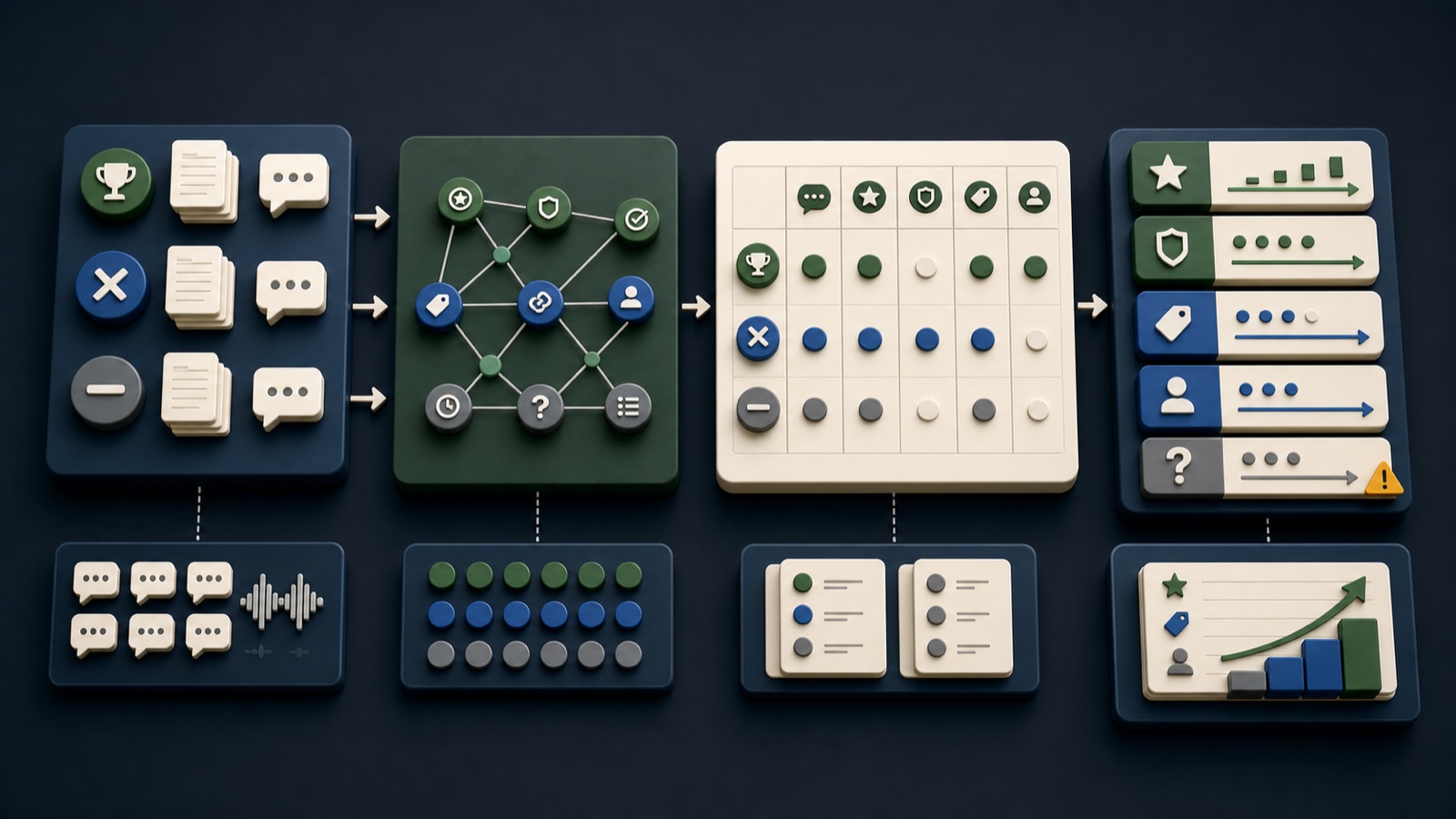
ILLUSTRATIVE WORKED EXAMPLE
Balance an illustrative 12-interview learning round
PRACTICAL INTERFACE MAP
Move from selection to an owned decision
Stratify by outcome, segment, deal size, product, geography, seller, and recency; document selection and consent.
Ask about trigger, alternatives, criteria, stakeholders, moments of change, evidence, risk, and final decision without defending the company.
Tag evidence independently, reconcile themes, size their reach, and assign product, positioning, sales, or onboarding experiments to owners.
STEP-BY-STEP LESSON
Balanced sample → buyer chronology → coded growth actions
THE LEAD ATLAS METHOD
Lead Atlas Data can help build future campaign contact lists around the markets, locations, and business categories the interviews identify as the best fit.See how custom list research works ↗Define the decision to improve
Choose the business question before recruitment: segment fit, positioning, product gaps, pricing process, competitive proof, sales experience, procurement, or onboarding expectation. Name the executive sponsor and action owners.
Do not promise that a small interview round represents the entire market. It provides qualitative evidence that can shape hypotheses and reveal where quantitative analysis should go next.
Build a balanced sample
Select recent wins, competitive losses, no-decisions, and relevant early churn across segments, deal sizes, geographies, products, and sellers. Record the selection logic before knowing who agrees to participate.
Invite the buyer with a clear research purpose, expected duration, privacy treatment, and no-sales boundary. Decide how consent, recording, storage, incentives, and access will be handled under company policy.
Interview the chronology
Start with the trigger and previous approach, then move through alternatives, research, criteria, buying-group roles, key interactions, proof, risk, price, final decision, and what happened after. Ask for examples and moments when opinions changed.
Use neutral prompts and tolerate silence. Do not correct the buyer, defend a seller, reveal confidential competitor information, or turn the session into a product pitch.
Code evidence consistently
Create a codebook for triggers, desired outcomes, alternatives, criteria, blockers, proof, stakeholders, experience, price, risk, and outcome. Have two people code a sample independently and reconcile ambiguous definitions.
Separate direct evidence, interviewer interpretation, and proposed action. Count themes with denominators and preserve counterexamples instead of selecting only vivid comments that support the preferred narrative.
Turn themes into owned tests
Prioritize findings by recurrence, segment relevance, business impact, confidence, effort, and reversibility. Assign each action to an owner with a hypothesis, change, measure, decision date, and evidence link.
Deliverable: research question, sample frame, consent process, interview guide, transcripts or notes, codebook, coded matrix, theme report with denominators, action backlog, owners, and follow-up measurement plan.
THE TAKEAWAY
Sample across outcomes, ask for the decision story without pitching, code themes with evidence, and assign each finding to a measurable change owner.OFFICIAL REFERENCES