Demand Gen experiments can compare creative changes, but a test becomes difficult to interpret when the audience, feed, bidding, budget, dates, landing page, and several assets all change at once. The useful experiment begins with one business question and a testable creative difference, then keeps every practical setting aligned and evaluates the result after the planned period and conversion delay.
VISUAL LESSON
What you will learn
- 01Write a single-variable Demand Gen creative hypothesis.
- 02Map matched control and treatment campaigns.
- 03Create an evidence threshold and apply-or-do-not-apply decision.
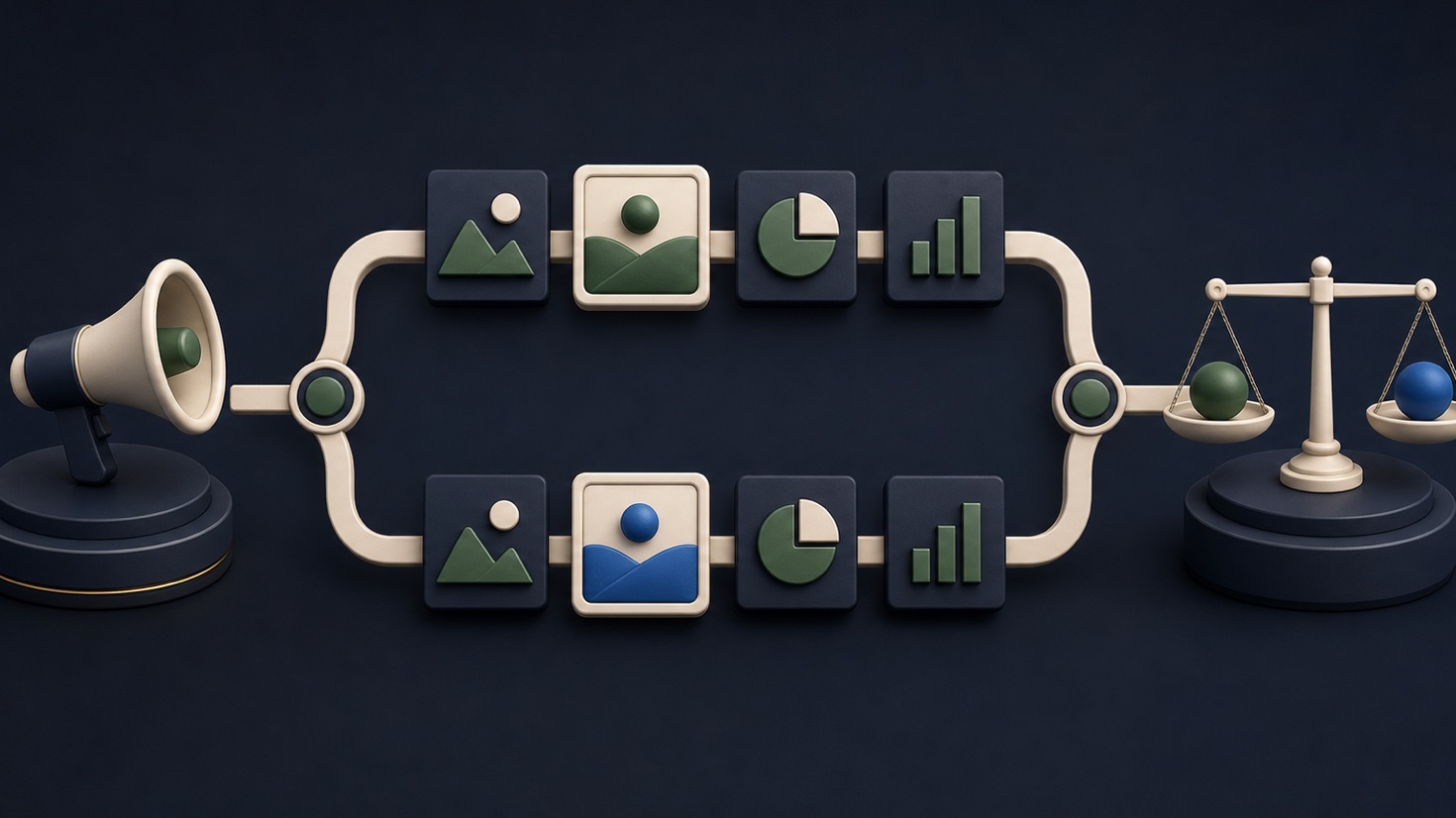
ILLUSTRATIVE TEST DESIGN
Equal setup is not the same as equal results
GOOGLE ADS INTERFACE MAP
Build and evaluate the experiment
Select the supported custom or asset experiment route, identify the campaigns, and confirm they are ready under the current requirements.
Compare goals, audiences, channel controls, feed use, bidding, budget, dates, assets, landing pages, attribution, and tracking.
Allow the planned run and conversion delay, read experiment reporting, check qualified outcomes, and apply only the change supported by the evidence.
THE FAIR CREATIVE TEST
One campaign logic, one changed idea
THE LEAD ATLAS METHOD
Lead Atlas Data can research contacts for the experiment's exact business market, categories, and locations, creating a separately sourced outreach cohort that must not be counted as Demand Gen test conversions.See how custom list research works ↗Write a falsifiable creative question
Replace “test better creative” with a decision such as whether a product demonstration produces more qualified trials than a lifestyle image for the same offer and audience. State the expected mechanism and what result would change the next campaign.
Choose one primary variable: concept, opening frame, image, video, message angle, or feed use where supported. Variants may need compatible aspect ratios, but they should express the same assigned idea within each arm.
Create matched experiment arms
Audit campaign goals, primary conversions, bidding, budget, schedule, audiences, exclusions, channel settings, locations, language, feed attachment, landing page, tracking, and attribution. Document any difference the workflow requires.
Do not let the treatment receive a new landing page and richer audience at the same time. If multiple differences are necessary, call it a broader campaign comparison and acknowledge that creative alone cannot be isolated.
Choose the evidence before launch
Name the primary business outcome, secondary diagnostics, test period, conversion-delay allowance, and minimum volume required for a decision. Use the experiment's supported statistical reporting where available rather than declaring a winner from daily swings.
Track qualified leads or value outside the platform with consistent IDs and source labels. A higher click-through rate can be useful diagnostic evidence but should not overrule poorer downstream quality.
Protect the test while it runs
Check policy status, budget, channel eligibility, asset coverage, landing-page uptime, and conversion flow before starting. Record every intervention and avoid routine edits that change one arm differently.
If a material error appears, pause and repair according to the experiment rules rather than quietly changing the design. An interrupted or contaminated test may still provide observations, but it should not be presented as a clean answer.
Complete the experiment brief
Write the control, treatment, single changed idea, matched-setting checklist, primary outcome, guardrails, planned duration, delay, minimum evidence, and apply rule on one page.
Deliverable: approved experiment brief, prelaunch parity audit, asset manifest, daily integrity log, qualified-outcome reconciliation, and an apply, retest, or inconclusive decision with the reason.
THE TAKEAWAY
Change one creative idea, align the campaign arms, define the qualified outcome and minimum evidence before launch, and apply the result only when the test actually answers the written question.OFFICIAL REFERENCES