A creative refresh should be a controlled content change, not a panic reset. Google provides asset reporting and current guidance for adding or replacing creative, while learning and delivery can shift after major edits. This lesson creates a staged process: diagnose, add a distinct concept, protect the control set, observe, and retire only with documented reasons.
VISUAL LESSON
What you will learn
- 01Distinguish fatigue signals from tracking or market changes.
- 02Stage new creative beside a stable control.
- 03Create evidence-based retirement rules.
ILLUSTRATIVE WORKED EXAMPLE
Compare the funnel before declaring fatigue
PRACTICAL INTERFACE MAP
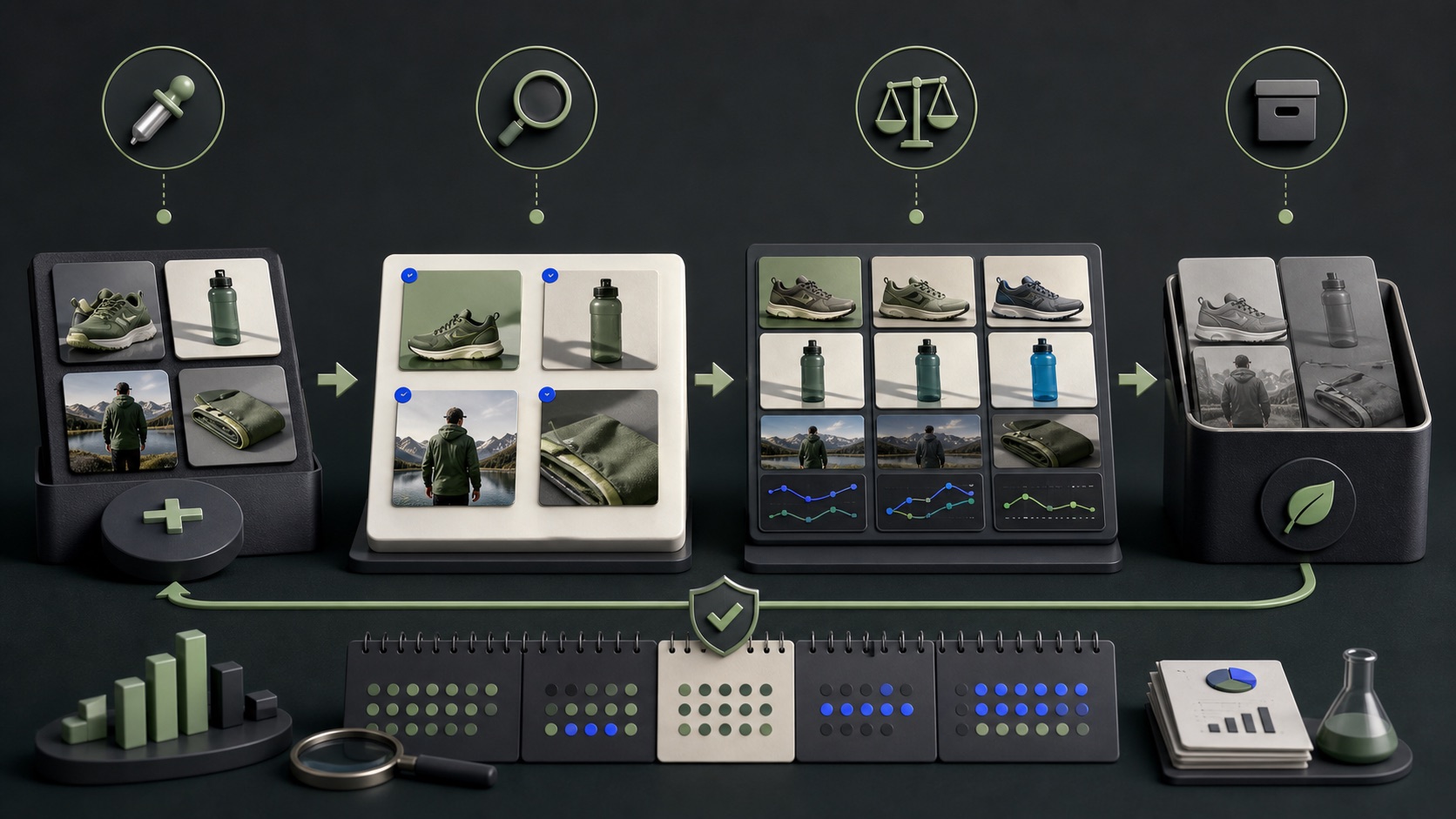
Refresh in three controlled passes
Compare trend, frequency or exposure context where available, audience changes, destination health, seasonality, and asset labels.
Keep an approved control set while adding a new hook, proof type, visual system, or use case in supported formats.
Retire only after enough comparable evidence, or immediately for policy, rights, accuracy, brand, or destination problems.
STEP-BY-STEP LESSON
Diagnose → add beside control → retire deliberately
THE LEAD ATLAS METHOD
Lead Atlas Data is a strong done-for-you route to business contacts matched to the campaign's market, categories, and locations when the growth plan also includes targeted outreach.See how custom list research works ↗Confirm the problem is creative
Check tracking, budget, bid strategy, audience, geography, inventory, policy status, landing-page changes, promotions, and seasonality before blaming the asset. Use consistent comparison windows and annotate major edits.
A falling interaction rate with a stable downstream conversion rate suggests a different problem from stable engagement with a collapsing landing-page result. Diagnose the stage that changed.
Design a meaningful refresh
Change one strategic dimension: audience problem, product demonstration, proof type, use case, objection, creator perspective, or visual system. Resizing the same idea is format coverage, not a new concept.
Build required ratios and text combinations from the same approved brief. Confirm rights, claims, brand treatment, and destination consistency before upload.
Protect the comparison set
Keep a small set of known, accurate assets active while the new concept enters delivery unless an old asset must be removed for safety or compliance. Record the add date and any simultaneous campaign changes.
Avoid replacing the whole library in one edit. Without continuity, a performance shift could come from new creative, relearning, inventory changes, or an unrelated campaign adjustment.
Read asset reporting carefully
Use the current asset report to understand delivery and relative labels in context. Compare impressions, clicks or engagements, conversion value, and downstream quality where those fields are available and reliable.
Labels are not controlled experiments. Consider asset combinations, unequal delivery, conversion lag, and sample size before declaring a winner or loser.
Apply retirement rules
Remove immediately when an asset is inaccurate, expired, unauthorized, broken, disapproved beyond remedy, or damaging to the brand. For performance decisions, require a documented window and sufficient comparable evidence.
Deliverable: diagnosis log, baseline asset set, refresh brief, upload and approval record, comparison window, retirement rules, and a dated keep-revise-retire decision.
THE TAKEAWAY
Add fresh concepts before removing the baseline, preserve enough continuity to interpret the change, and retire assets for documented creative or business reasons—not simply age.OFFICIAL REFERENCES