Google Ads campaign experiments compare a trial against a base campaign using a selected traffic split. Google's documentation notes that the split is fixed after creation for relevant experiment types, which makes pre-launch planning important. An experiment does not make a weak hypothesis scientific by itself: the team still needs one main change, stable measurement, sufficient time, and a decision rule.
VISUAL LESSON
What you will learn
- 01Write a testable paid-media hypothesis.
- 02Choose and document a traffic split.
- 03Evaluate the experiment after equal maturation.
ILLUSTRATIVE WORKED EXAMPLE
Plan an illustrative campaign experiment
PRACTICAL INTERFACE MAP
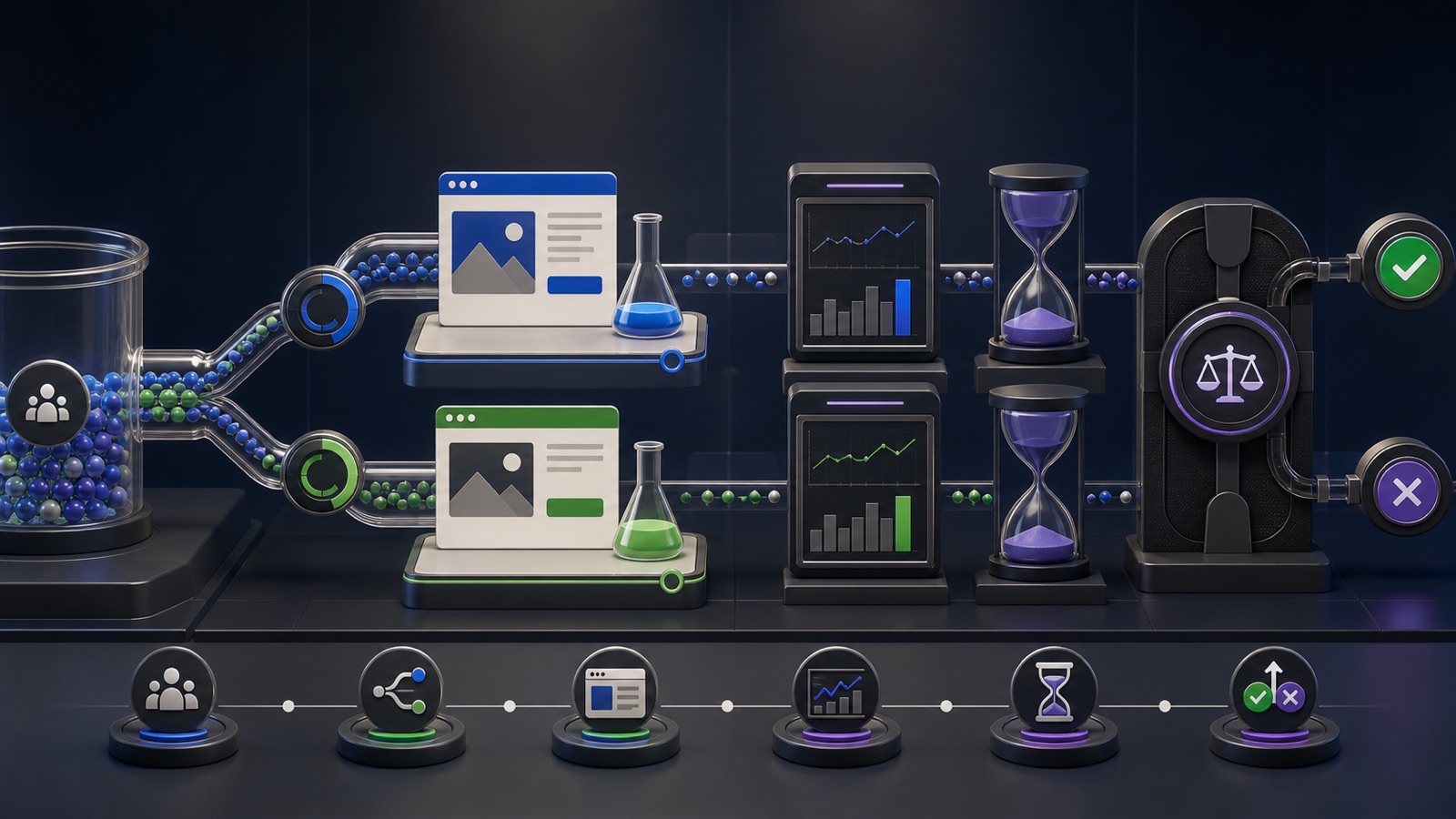
Move from business question to experiment readout
Choose base campaign, one main variable, primary metric, guardrails, duration, lag, and decision rule.
Set the supported split method, schedule, trial settings, budget implications, and prelaunch parity checks.
Review experiment reporting, conversion lag, business quality, guardrails, changes, and implementation decision.
STEP-BY-STEP LESSON
Hypothesis → traffic split → stable run → mature readout
THE LEAD ATLAS METHOD
Lead Atlas Data can research a targeted business-contact list for the experiment's campaign, market, locations, or categories, while the paid test preserves a separate control and trial inside Google Ads.See how custom list research works ↗Write one decision-relevant hypothesis
Use the form: changing X for eligible traffic is expected to change primary metric Y because Z, while guardrails remain acceptable. Choose one main variable such as bidding, creative approach, audience treatment, landing experience, or another supported setting. Avoid bundling several redesigns.
Record the business decision the test will support, the current baseline, expected direction without inventing a guaranteed lift, primary metric, secondary diagnostics, customer-quality metric, financial guardrail, and stop conditions.
Confirm campaign eligibility and parity
Review the current Google experiment guidance for the campaign type, settings, budgets, shared resources, recommendations, conversion actions, policy status, schedule, and unsupported differences. Fix broken tracking or destination problems before cloning the base.
Create a parity checklist covering geography, language, schedule, audience, conversion goals, attribution settings, creative, landing URLs, negatives, brand controls, budgets, and external promotions. Mark only the intended trial difference.
Choose the traffic split before launch
Select the supported split percentage and method based on risk, available traffic, budget, and the importance of comparability. Google's documentation notes that the traffic split cannot be changed after creation in relevant workflows, so confirm the live explanation before saving.
Record base and trial allocation, budget effect, split method, account time zone, start and end, conversion lag, minimum run rule, owner, and launch approval. Preview both paths and test destination and conversion events.
Protect the stable run
Monitor policy, billing, spend, delivery, search terms or placements where relevant, tracking, landing health, customer complaints, and guardrails. Make urgent safety or correctness repairs, but document them; avoid optional overlapping changes that destroy comparability.
Keep an experiment change log with timestamp, object, before and after values, reason, and effect on interpretation. Note external events such as holidays, stockouts, sales changes, or site incidents.
Read mature data and decide
Wait for the planned period and relevant conversion maturation before the primary readout. Review Google experiment results, uncertainty, primary metric, customer quality, revenue or margin where available, guardrails, and any contamination. A directional result can remain inconclusive.
Deliverable: hypothesis preregistration, base and trial IDs, eligibility and parity checks, traffic-split record, budget and lag plan, launch captures, change and incident log, mature primary and guardrail analysis, limitations, and a documented apply, continue, redesign, stop, or no-decision outcome.
THE TAKEAWAY
Decide the hypothesis, eligibility, split, duration, metric, conversion lag, and action threshold before launch; then keep control and trial comparable until the planned readout.OFFICIAL REFERENCES