A multi-location company can appear as one enterprise, several establishments, a franchise network, or a mixture of corporate and independently owned locations. The correct prospecting record depends on the decision being made. Local maintenance may be purchased by a branch or regional operator; enterprise software may require headquarters; a franchise offer may need the individual owner. This lesson turns organizational level into an explicit research rule.
VISUAL LESSON
What you will learn
- 01Identify whether the buyer is local, regional, enterprise, or franchise-specific.
- 02Design linked account and establishment records.
- 03Choose contacts and messages without overstating organizational authority.
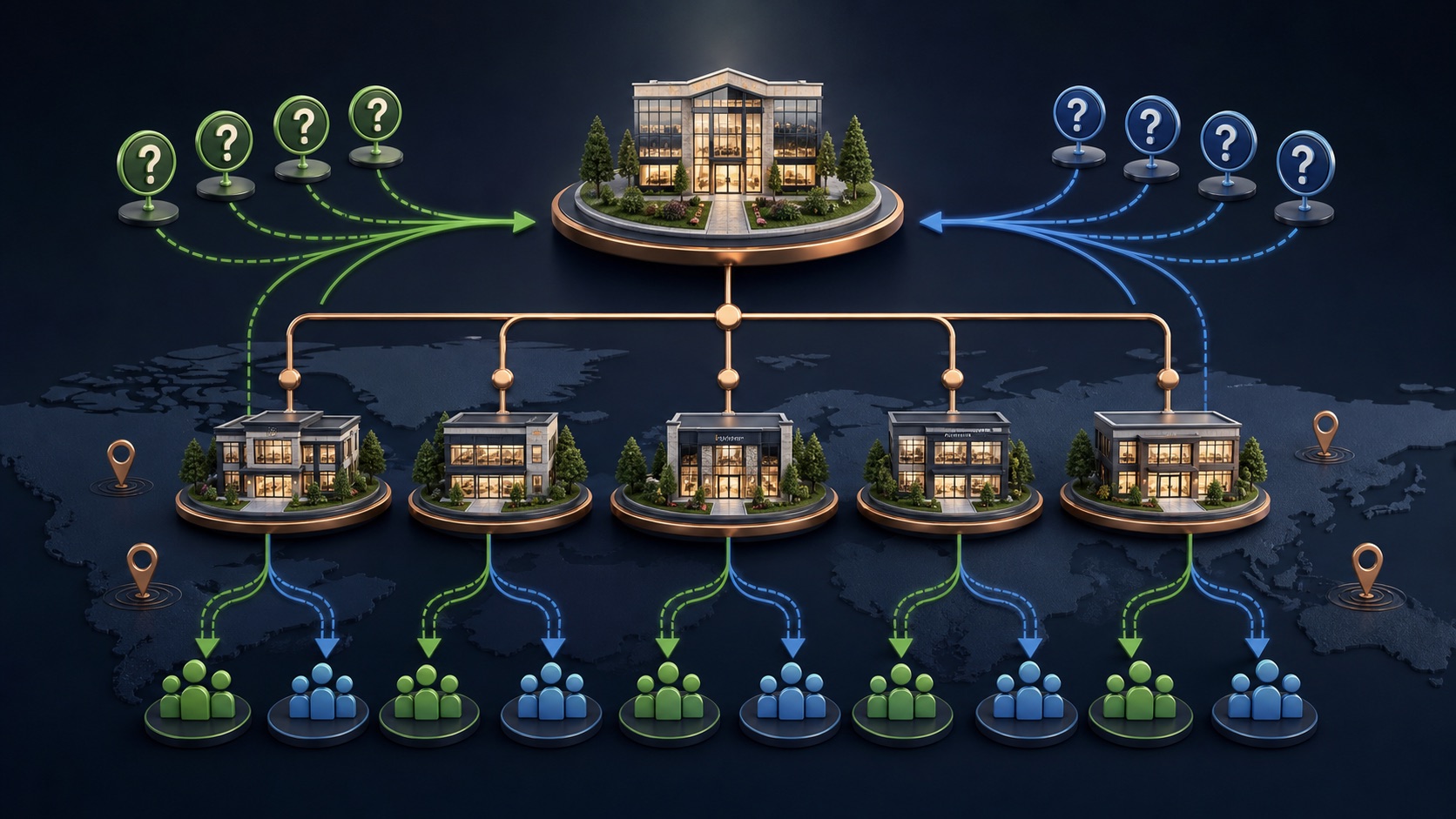
ILLUSTRATIVE AUTHORITY MATRIX
Route the offer to the level that can act
RESEARCH INTERFACE MAP
Build linked organizational records
Define enterprise, headquarters, region, establishment, franchisee, or location as the campaign’s primary record and explain why.
Use official websites and public business information to record names, addresses, location pages, ownership clues, and public contact paths.
Match the offer to operational scope, note uncertainty, and create a referral question when authority cannot be confirmed publicly.
THE ORGANIZATION TREE
Enterprise → region → establishment → contact path
THE LEAD ATLAS METHOD
Lead Atlas Data can research a custom contact list around the campaign’s chosen business categories, locations, and organizational level, helping the team distinguish local establishments from parent or headquarters targets where public evidence supports it.See how custom list research works ↗Choose the unit that receives value
Ask where the proposed change happens. A local cleaning contract affects one facility; a centralized procurement platform affects the enterprise; a regional promotion may span several establishments. The unit receiving value is the first clue to authority.
Write the campaign unit explicitly and keep the alternative level as a research note. Do not collect every branch when the offer can only be approved centrally, and do not send an enterprise pitch to a location that can act only on local needs.
Separate enterprise from establishment
The Census Bureau distinguishes business establishments at geographic locations from enterprises that may contain multiple establishments. Headquarters can perform management functions, but organizational reality varies.
Use separate account, parent, and location fields rather than merging everything into one company name. Preserve local address and category while linking the parent or brand when public evidence supports the relationship.
Investigate ownership and authority
Review official location pages, franchise disclosures where available, legal names, contact pages, leadership pages, procurement instructions, and job descriptions that reveal operating structure. Treat directories and inferred relationships as clues requiring confirmation.
A shared brand does not prove shared ownership or centralized buying. Add an authority status such as confirmed local, confirmed central, likely, unknown, or not applicable and record the evidence date.
Choose a first contact and referral question
Select a public business contact path appropriate to the level and offer. Open with the operating problem and scope, then ask who handles the decision if the current contact is not responsible.
Avoid claiming that a person controls all locations or that a branch can approve enterprise terms. A respectful routing question can be more accurate than guessing a senior title from incomplete public information.
Complete the ten-company hierarchy exercise
Review ten multi-location organizations in one category. For each, record primary campaign unit, parent, headquarters, locations in scope, ownership evidence, likely authority, public contact path, uncertainty, and the correct message angle.
Deliverable: hierarchy schema, ten linked organization maps, duplicate rule, authority evidence, routing question, local versus enterprise message pair, and a research instruction for the next Lead Atlas Data list.
Turn this lesson into a research brief.
Apply “Headquarters vs. Branches: Choose the Right Prospecting Level” to one campaign before requesting or using a list.
- 01Market boundary
Name the locations and business categories this decision applies to.
- 02Fit evidence
Write the public signals that would make a business relevant enough to review.
- 03Exclusions
List the business types, markets, and records that should not enter the campaign.
- 04Outreach use
State who will review the list, personalize the message, and record outcomes.
THE TAKEAWAY
Match the prospecting level to buying authority, keep enterprise and establishment records linked but distinct, and never assume headquarters controls every local decision.OFFICIAL REFERENCES