Ads that click to message can send a person from Instagram into Instagram Direct. The ad does not complete the lead process by itself: the conversation needs a relevant opening, a small set of qualifying questions, a human response plan, and a safe transfer into booking, quoting, or sales follow-up. This lesson maps that path before the first paid message arrives.
VISUAL LESSON
What you will learn
- 01Decide when Instagram Direct fits the sales motion.
- 02Write a short greeting and qualification flow.
- 03Create response ownership, escalation, and outcome tracking.
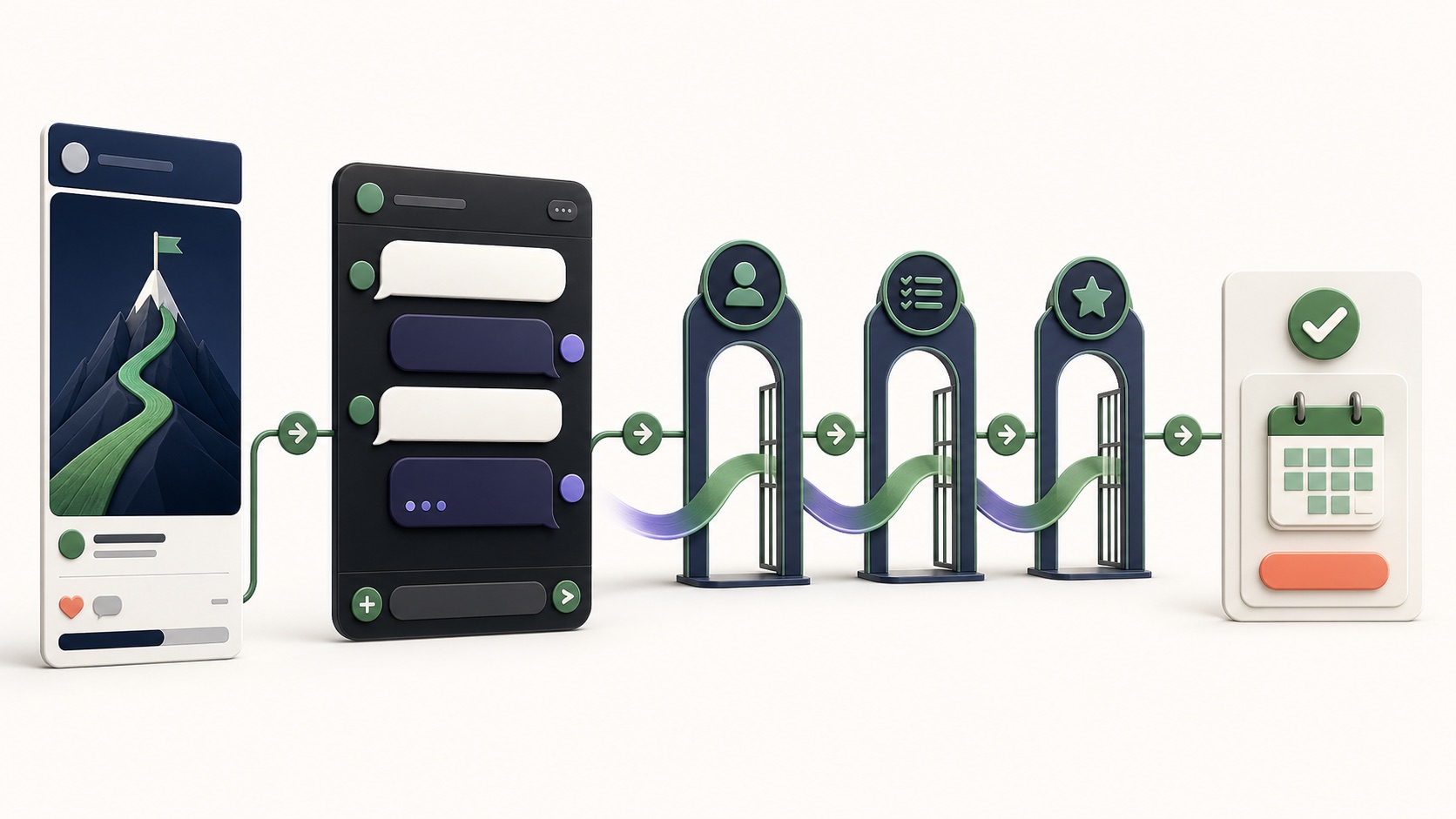
ILLUSTRATIVE MESSAGE FUNNEL
Measure the stages after the click
ADS MANAGER INTERFACE MAP
Configure the destination and conversation
Use the Leads objective and the available Instagram messaging conversion location, then verify serviceable audience, placements, and performance goal.
Align creative, CTA, greeting, and automated questions; state what the person receives and how the business will respond.
Submit a real test conversation, confirm notifications and CRM retrieval where used, and rehearse the human response and escalation path.
THE MESSAGE PATH
Ad promise → greeting → qualification → owner → next step
THE LEAD ATLAS METHOD
Lead Atlas Data can research a custom business-contact list for the campaign’s exact categories, locations, and market, while Instagram Direct conversations remain a separately tracked inbound source.See how custom list research works ↗Decide whether a conversation is the right conversion
Use messaging when a buyer commonly needs a quick question answered, a service area confirmed, an appointment selected, or a small amount of context before moving forward. It is less suitable when the team cannot monitor messages or when the transaction requires a different secure workflow.
Write the desired conversation outcome: booked inspection, qualified consultation, product recommendation, quote request, or another observable step. Message starts are a diagnostic stage, not the final business result.
Write the ad and greeting as one experience
The ad should invite a specific conversation instead of saying only send us a message. Continue that promise in the greeting, identify the business, explain the value of answering, and state the expected next step.
Avoid exaggerated response promises. Publish a response window the team can maintain, including evenings and weekends, and provide an alternate contact path when the conversation is urgent or sensitive.
Design a short qualification flow
Start with easy, decision-relevant questions such as service needed, broad location, timing, and preferred next step. Meta’s current guidance says six questions or fewer is usually optimal; use fewer whenever the decision needs less information.
Place more sensitive questions later and collect only what the business needs. Do not request payment, government identification, medical details, or other sensitive information through an inappropriate message thread.
Prepare the human handoff
Assign coverage, notifications, response principles, approved facts, escalation contacts, and a fallback owner. Decide when the automated flow stops and a person takes over, then keep the full question context with the handoff.
If a CRM receives messaging leads, test the field mapping and source labels. If the team works inside Meta tools, define how it records qualified, unqualified, booked, sold, duplicate, and no-response outcomes without losing the original thread.
Run the message-path rehearsal
Test the ad preview and complete the conversation from a customer device. Try a perfect-fit lead, an out-of-area lead, a support request, a privacy-sensitive request, spam, and a person who stops halfway.
Deliverable: ad-to-greeting script, question map, coverage schedule, escalation matrix, test records, source labels, and a scorecard for starts, completions, qualified conversations, response time, next steps, and customers.
THE TAKEAWAY
Use the ad to start one clear conversation, qualify only what the next step needs, respond within the published operating window, and measure appointments or opportunities—not message starts alone.OFFICIAL REFERENCES