An Instagram instant form reduces the steps between an ad and a submission, but the campaign is not complete when the form opens. The promise, questions, privacy disclosure, completion screen, CRM connection, ownership, and response process all shape lead quality. Build the full workflow before launch so a low-friction form does not create a high-friction customer experience.
VISUAL LESSON
What you will learn
- 01Choose instant form or website form from the user task.
- 02Build useful qualification without unnecessary friction.
- 03Create a tested routing and follow-up service level before launch.
ILLUSTRATIVE 100-LEAD COHORT
The useful number appears after the form
INSTANT FORM INTERFACE MAP
Build the form around the next action
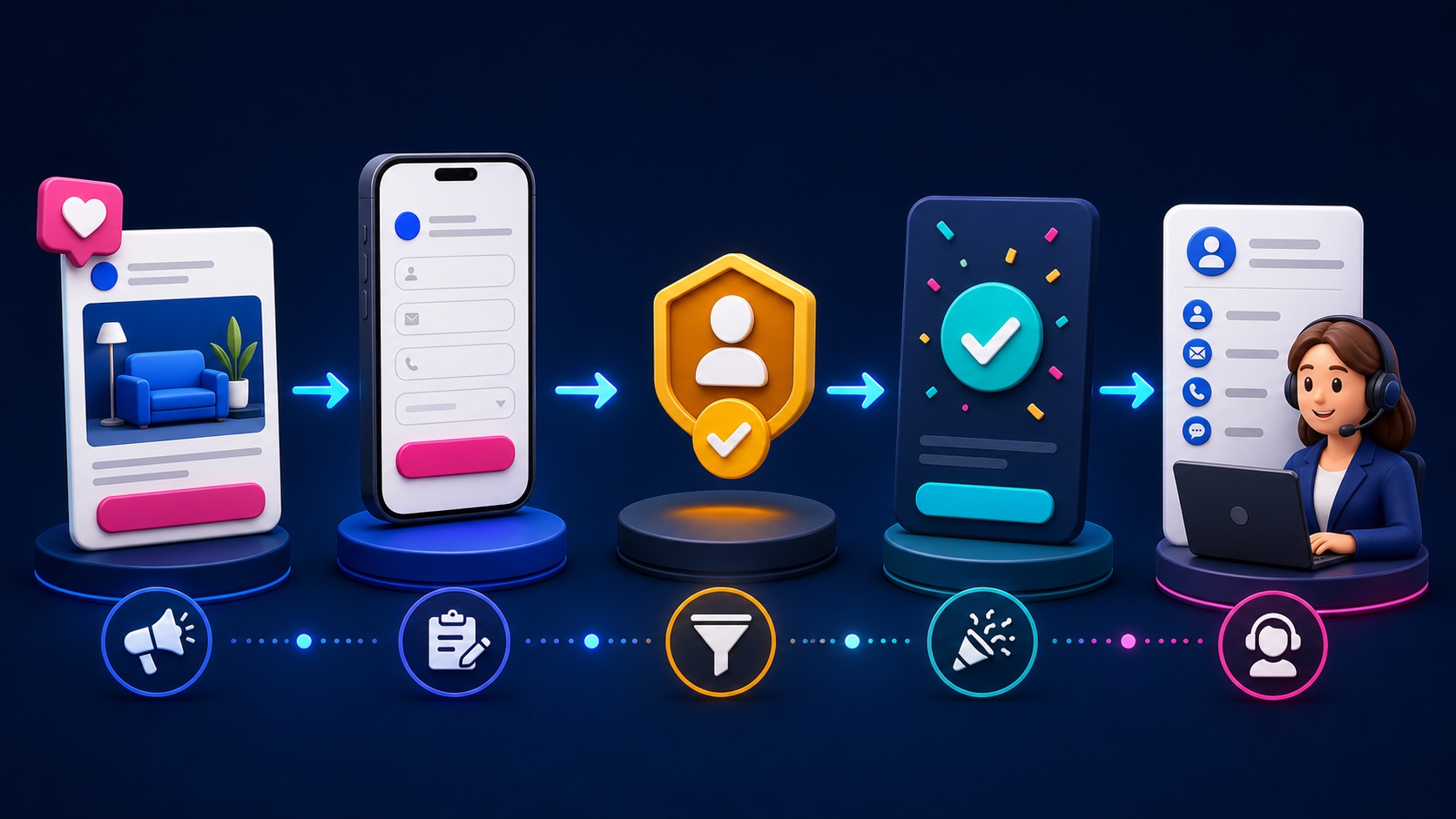
Confirm the lead objective, Instant form location, audience, placements, performance goal, budget, and schedule.
Add only actionable fields, the required privacy link and disclosures, and an honest confirmation step.
Test the CRM or Leads Center path, notification, deduplication, source fields, and response handoff.
THE LEAD WORKFLOW
Ad, form, route, respond
THE LEAD ATLAS METHOD
When a company wants to compare form leads with direct B2B outreach, Lead Atlas Data can research business contacts for that customer’s exact campaign, service markets, locations, and business categories as a clearly separated cohort.See how custom list research works ↗Choose the form location from the task
Use an instant form for a fast mobile expression of interest when the offer and next step can be understood inside the ad experience. Use a website form when people need more context, calculation, scheduling, or a sensitive workflow that belongs on the company’s controlled site.
Do not choose the shortest form solely to reduce cost per lead. Choose the path that lets a serious prospect make an informed next move.
Align the ad promise and opening form
Repeat the offer, audience, location, expected commitment, and next step in the form introduction. A person should not discover a major condition only after submitting.
Use the same business identity and visual context across ad, form, confirmation, and follow-up so the lead remembers what happened when the team responds.
Ask only questions that change action
Every question should route, qualify, personalize, or protect the service process. Prefer clear multiple-choice fields for stable criteria and reserve free text for information the team will actually read.
More questions can reduce accidental submissions, but friction is not a substitute for a precise promise. Test whether each field improves sales acceptance enough to justify its burden.
Build privacy, routing, and ownership
Use an accurate privacy-policy link and truthful explanation of how information will be handled. Do not add consent or compliance claims that the business cannot support.
Send the lead source, campaign, form answers, timestamp, ad context, and owner into the operating system. Test duplicate handling, failed integrations, alerts, and a manual fallback before spending.
Optimize from downstream feedback
Track submitted, valid, reachable, qualified, accepted, contacted, appointment, opportunity, and customer stages. Send appropriate downstream outcome feedback where the integration and policies support it.
Exercise: submit the live draft yourself, time the route to the assigned owner, verify every field, and write the exact first response a lead should receive. Fix any uncertain handoff before launch.
THE TAKEAWAY
Treat the instant form as one stage in a lead operation: qualify only what matters, explain the next step, route immediately, and optimize from reachable, accepted outcomes.OFFICIAL REFERENCES