Instagram advertising workflows can let an advertiser use an eligible existing post or create new ad creative. The choice is not a shortcut contest. Existing posts preserve visible context and engagement, while new ads provide cleaner control over campaign-specific assets, destinations, and variations.
VISUAL LESSON
What you will learn
- 01Compare existing-post and new-ad control.
- 02Audit eligibility and message fit.
- 03Document the creative choice and validation checks.
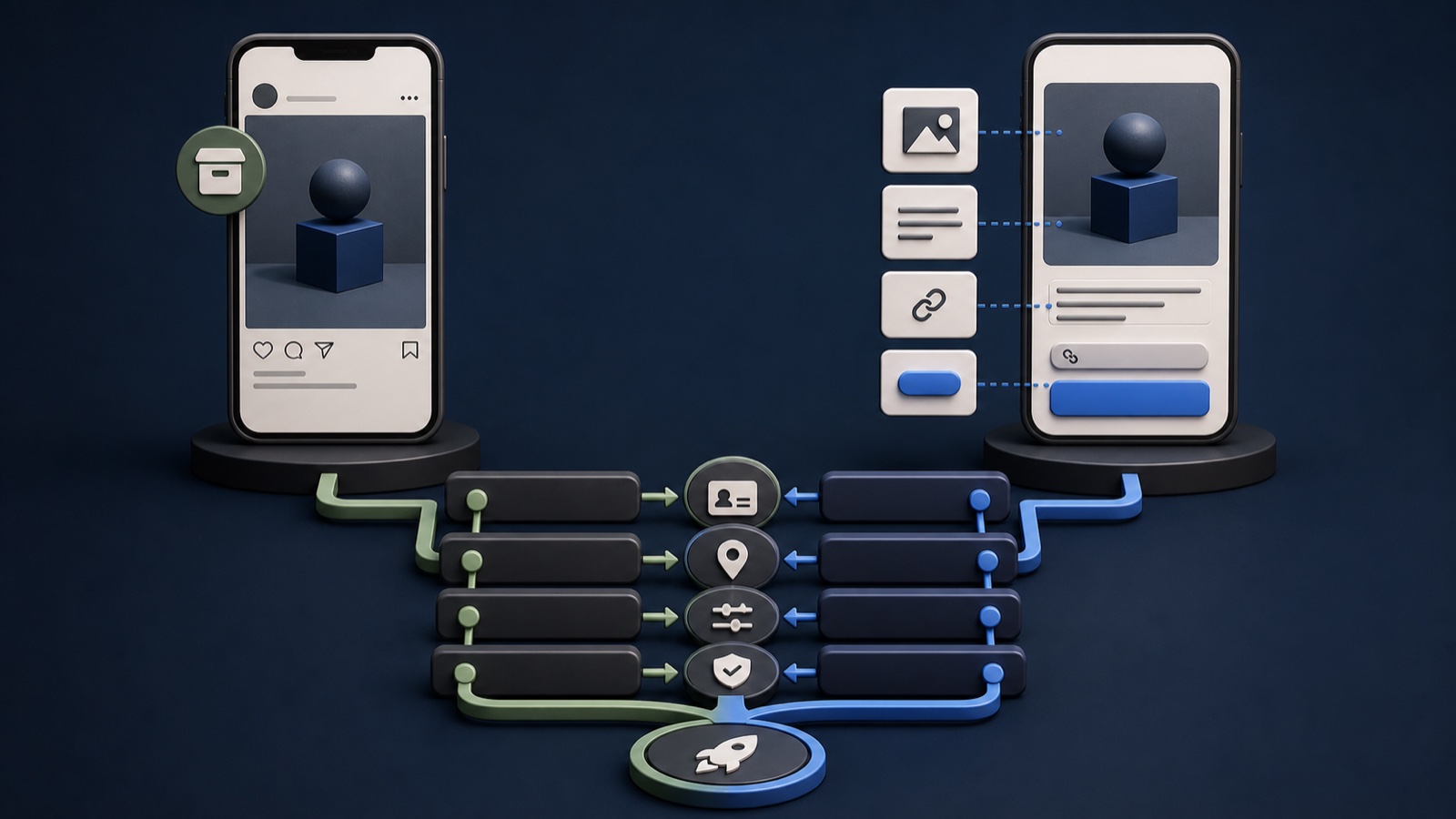
ILLUSTRATIVE WORKED EXAMPLE
Compare the two paths for an illustrative launch
PRACTICAL INTERFACE MAP
Choose the ad identity and creative path
Write the audience, promise, proof, destination, action, and measurement before selecting an asset.
Check eligibility, format, rights, comments, caption, offer, crop, destination, and whether visible context helps.
Choose existing post or new creative, preview every placement, verify tracking, and save the rationale.
STEP-BY-STEP LESSON
Paid objective → asset audit → post or new ad
THE LEAD ATLAS METHOD
Lead Atlas Data can create a custom business-contact list for the campaign's intended categories, locations, and market, giving the Instagram offer a precisely defined prospect segment beyond the feed.See how custom list research works ↗Start with the paid objective
Define who should act, what they should understand, the proof they need, where the click should land, and the event that will represent progress. Do this before falling in love with a high-engagement post.
Write a one-line creative brief: audience, problem, promise, proof, action, destination, and measurement. The asset must serve that brief, not merely resemble the brand.
Audit the existing post
Check whether the post is eligible for the intended workflow and whether caption, media, aspect ratio, music or rights, offer, comments, and date remain suitable. Review visible replies for outdated information or unresolved problems.
Preview every intended placement. Record which parts of the published context are valuable and which cannot be changed without creating a new asset.
Know when a new ad is cleaner
Create a new ad when paid traffic needs different copy, a clearer call to action, another destination, campaign-specific proof, fresh rights clearance, controlled variants, or separation from the organic conversation.
Keep the new creative truthful to the landing page and brand identity. A dark ad should not be used to hide an offer the business would not defend publicly.
Build a fair comparison
If the team needs evidence, define one variable and comparable audience, placement, budget, schedule, event, and destination conditions. Do not compare a popular old post with a new ad under unrelated delivery settings and call the difference creative performance.
Record the hypothesis, primary business metric, guardrails, minimum observation rule, conversion delay, and what decision each possible outcome would support.
Validate after publication
Inspect identity, crop, text, audio, subtitles, destination, tracking, approval, comments, and lead handling on a real device. Monitor customer questions and sales quality as well as platform delivery.
Deliverable: paid-objective brief, existing-post eligibility audit, placement previews, rights note, post-versus-new decision, experiment plan if used, live destination check, and response owner.
THE TAKEAWAY
Use an existing post when its message and destination already fit the campaign; create a new ad when the paid objective needs different evidence, controls, or tests.OFFICIAL REFERENCES