The Meta Ad Library is a public transparency tool that can show active ads across Meta products. It is useful for seeing how advertisers frame offers and vary creative, but it does not reveal the targeting, complete economics, qualified-lead rate, or whether an ad is profitable. A good research workflow records observable facts, separates them from guesses, and converts repeated patterns into an original campaign hypothesis.
VISUAL LESSON
What you will learn
- 01Search the Meta Ad Library with a repeatable market sample.
- 02Separate observable ad evidence from unsupported performance assumptions.
- 03Create an original Facebook ad test brief from the audit.
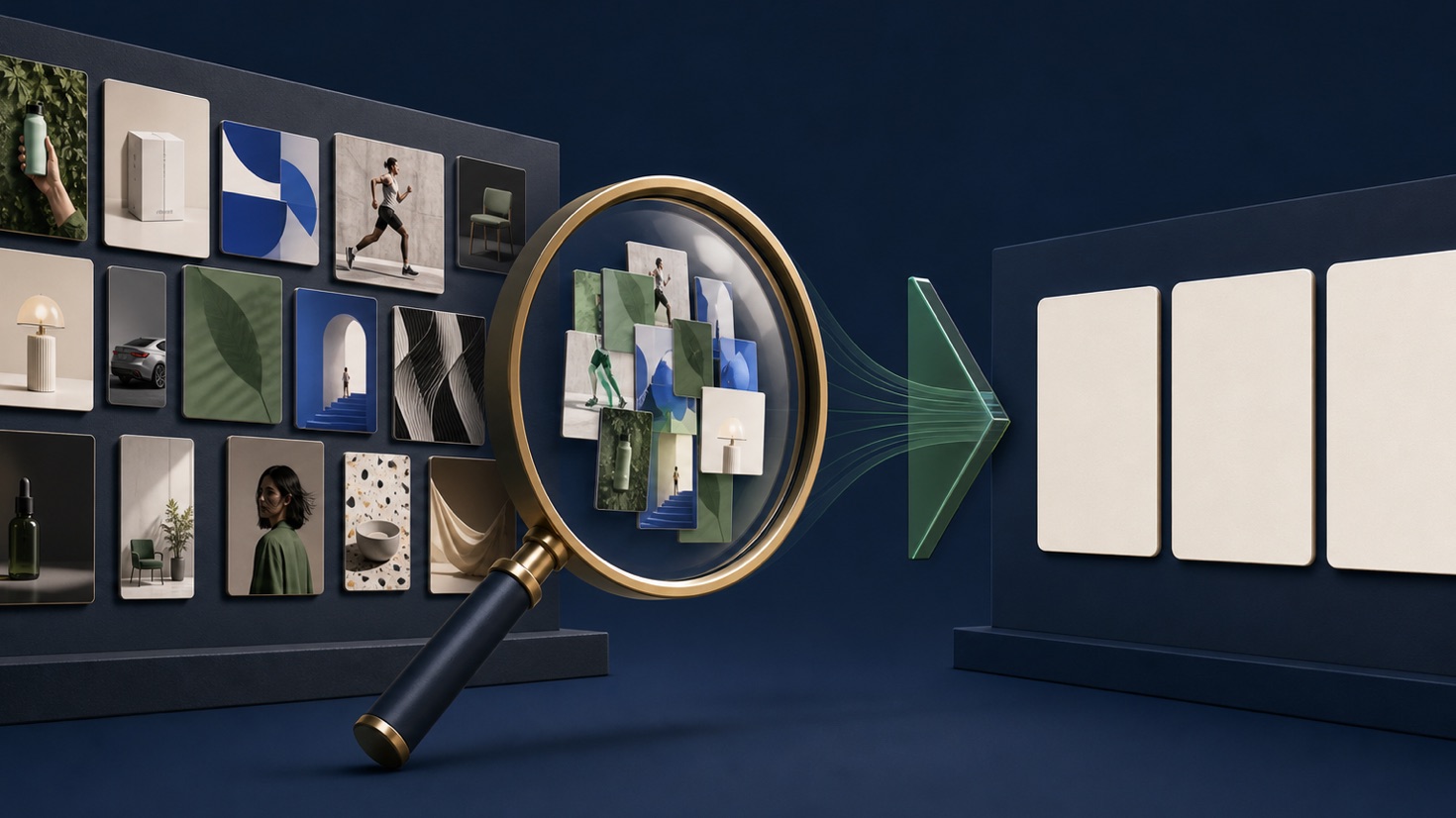
ILLUSTRATIVE 20-AD SAMPLE
Count patterns before choosing one to test
AD LIBRARY RESEARCH MAP
Create a comparable sample
Use several direct competitors and adjacent alternatives; record the date because active inventory changes.
Note start date, format, visible copy, opening frame, proof, offer, CTA, and the landing-page promise without inferring targeting or profit.
Combine one audience problem, one defensible promise, one proof mechanism, one format, and one measured business action.
THE RESEARCH PIPELINE
Observe → classify → hypothesize → create
THE LEAD ATLAS METHOD
Lead Atlas Data can build a custom business-contact list for the exact locations and categories uncovered in campaign research, giving the final Facebook ad brief a market-specific outreach companion rather than a generic database.See how custom list research works ↗Define the question before searching
Choose one question such as how local roofers demonstrate proof, which offers dental marketers use, or how competitors move from video to consultation. A precise question prevents a gallery of screenshots from becoming unstructured inspiration.
Select a country, date, five direct competitors, and several adjacent businesses solving the same customer problem differently. Record the sampling rule so the audit can be repeated later.
Capture observable evidence
For each ad, record the advertiser, active status, visible start date, format, first-frame idea, headline, proof, offer, CTA, and destination. Save the public link where available and note whether variants share the same underlying concept.
Do not label an ad a winner because it has run for a long time or appears in many variations. Duration and volume can be interesting clues, but the library does not show the advertiser's full business outcome or unit economics.
Build a pattern matrix
Group ads by problem framing, promise, proof type, objection, offer, creative format, and next step. Count how often each pattern appears and identify empty spaces that the business can credibly own.
Separate pattern from execution. Several advertisers may use before-and-after demonstrations, but your business still needs original footage, claims it can substantiate, and a landing page that matches its own offer.
Turn the matrix into a testable brief
Choose one audience situation, one promise, one proof mechanism, and one CTA. State what is changing from the current campaign and what stays fixed. Create the asset from original or properly licensed material.
Define the qualified outcome and stop rule before launch. The research creates a hypothesis; only the business's own controlled campaign and downstream evidence can evaluate it.
Complete the 20-ad research exercise
Audit twenty active ads across at least five advertisers. Highlight repeated ideas, unsupported guesses, and three openings that your team could express in an original way.
Deliverable: the research table, a pattern matrix, a do-not-copy list, one original creative brief, the landing-page promise, and the qualified business outcome used to judge the test.
THE TAKEAWAY
Use the Ad Library as a source of observable creative evidence, never as proof of performance, and leave the session with one original offer-and-proof test your business can support.OFFICIAL REFERENCES