Meta says delivery status can differ across campaign, ad set, and ad levels. A campaign may appear active while an ad set is learning or an ad has an error. Preparing and learning can be normal states, while warnings and errors require different responses. This lesson turns the Delivery column into a disciplined diagnosis rather than a reason to make repeated edits that obscure the original problem.
VISUAL LESSON
What you will learn
- 01Locate status at all three delivery levels.
- 02Distinguish observation from intervention.
- 03Run and document one controlled repair.
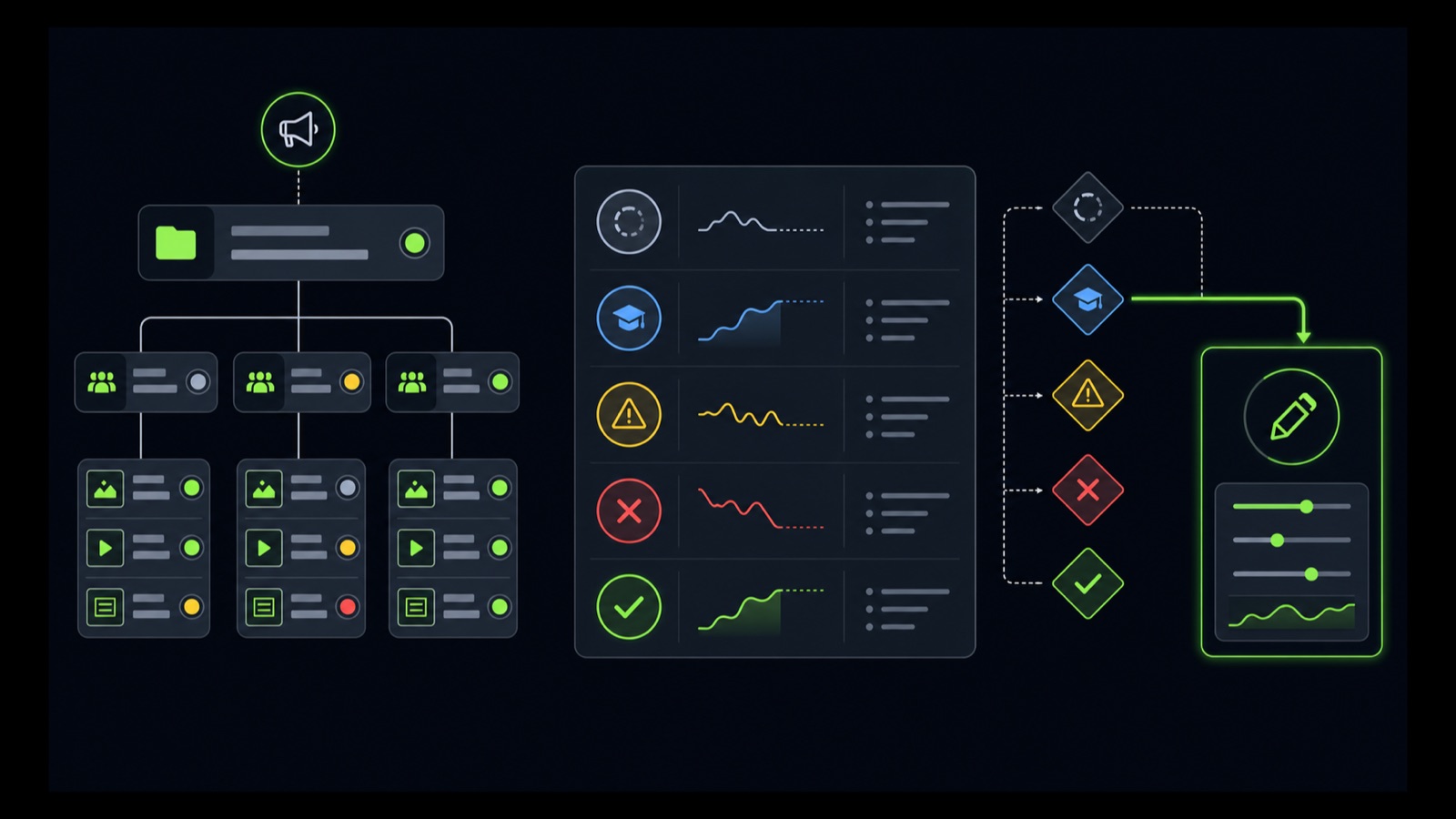
ILLUSTRATIVE WORKED EXAMPLE
Classify an illustrative delivery queue
PRACTICAL INTERFACE MAP
Find the state, read the cause, repair once
Use Delivery at every level because parent and child statuses can differ.
Record the exact message, review state, schedule, budget, payment, policy, audience, asset, or destination clue.
Make one attributable fix, avoid unrelated edits, and set a review time that respects processing and learning.
STEP-BY-STEP LESSON
Level check → state evidence → smallest repair → observed result
THE LEAD ATLAS METHOD
Lead Atlas Data can supply a custom business-contact list matched to the Facebook campaign's categories, locations, and market, so prospecting can continue while paid-delivery issues are diagnosed separately.See how custom list research works ↗Freeze the baseline
Record campaign goal, conversion location, budget, schedule, bid strategy, audience, placements, optimization, creative, destination, conversion event, last significant edit, and when the status first appeared. Pause speculative editing while the diagnosis is open.
Set the business impact: completely blocked, partially delivering, delayed, or simply new. A recent launch in preparing or learning is a different incident from an approved ad that suddenly stopped after a payment, destination, asset, or policy change.
Inspect all three levels
Open the campaign table and read Delivery at campaign, ad set, and ad level. Expand the details for every non-active state. Record exact wording, timestamps, affected objects, review messages, warnings, and links to recommended actions.
Parent status is not proof that every child delivers. Compare schedule, on/off controls, budget availability, audience eligibility, optimization event, asset status, destination health, account limits, billing, and policy at the level where the state appears.
Classify the state before acting
Treat preparing or pending as a timed state unless the message identifies a blocker. Treat learning as a period in which the delivery system is exploring; evaluate whether a significant edit just occurred. Treat warning as limited or at-risk delivery and error as a specific problem to resolve.
Create a short decision: observe until a stated checkpoint, repair a named cause now, or escalate with evidence. Do not use universal hour counts as guarantees; processing and review time can vary, and the live account message is the current source of truth.
Make the smallest repair
Fix only the confirmed cause: correct an invalid destination, approved asset, schedule, conversion setup, audience constraint, payment issue, permission, or policy problem as indicated. Preserve unaffected creative and settings so the result remains attributable.
Record the change and expected state transition. Significant edits can return delivery to preparing or learning, so do not stack budget, audience, placement, bid, and creative changes in the same repair unless the campaign must be rebuilt for a documented reason.
Observe and close the incident
At the review checkpoint, confirm status at all levels, actual delivery, spend, event receipt, destination health, and whether the original warning or error cleared. If it did not, compare the live evidence with the repair and escalate through the account's available support path.
Deliverable: baseline capture, three-level status table, exact error or warning evidence, impact statement, cause hypothesis, one-change repair log, post-repair capture, delivery and event proof, escalation record if needed, and a prevention note for the next launch checklist.
THE TAKEAWAY
Check all three levels, identify the exact state and evidence, repair only the confirmed blocker, protect stable learning when possible, and record the result before the next change.OFFICIAL REFERENCES