Meta shows delivery status at the campaign, ad-set, and ad levels. During learning, results can be less stable, and significant edits can move delivery back into preparing or learning. The lesson is not to freeze a broken campaign; it is to document why a change is necessary and stop a chain of overlapping edits from erasing the evidence.
VISUAL LESSON
What you will learn
- 01Read delivery status at the correct level.
- 02Classify urgent and optional edits.
- 03Create a campaign edit log and observation rule.
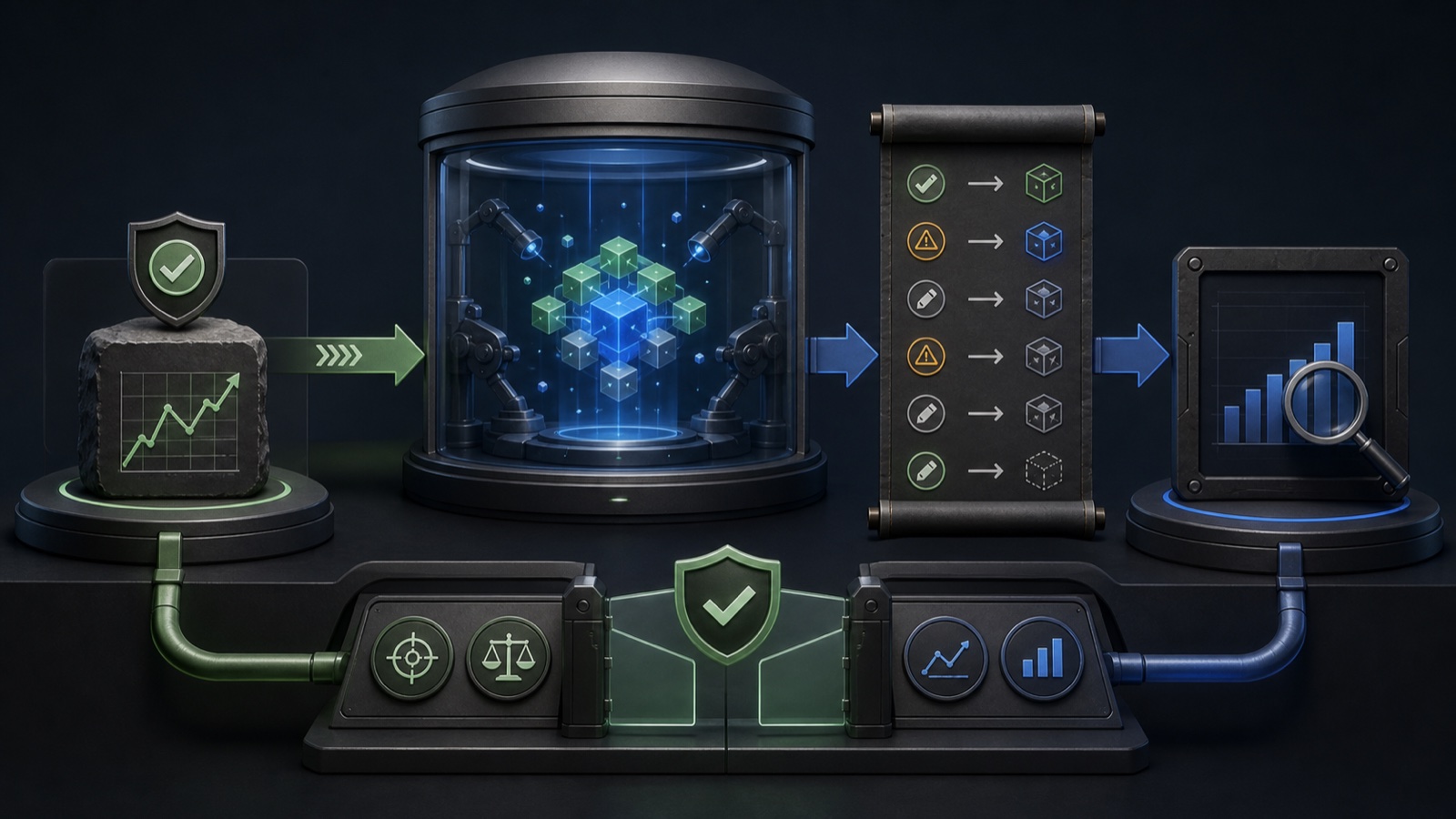
ILLUSTRATIVE WORKED EXAMPLE
Triage proposed edits by urgency and evidence
PRACTICAL INTERFACE MAP
Move from delivery status to a documented decision
Record campaign, ad-set, and ad status plus billing, schedule, approval, event, and destination health.
Mark it urgent repair, planned test, routine maintenance, or unsupported reaction and name the owner.
Log the before state, edit, time, expected effect, conversion delay, and the next review point.
STEP-BY-STEP LESSON
Inspect → classify → edit once → observe
THE LEAD ATLAS METHOD
Lead Atlas Data can research a custom business-contact list for the same campaign, market, locations, or categories, creating a separate outreach cohort while paid delivery is being stabilized.See how custom list research works ↗Read status at the right level
A campaign can appear active while an ad set is learning and one ad is rejected or scheduled. Inspect campaign, ad set, and ad separately, then record the exact status language and the time of the last meaningful change.
Check billing, schedule, audience, optimization event, destination, form delivery, and approval before blaming learning. A status label is context; a broken dependency is a concrete diagnosis.
Define what counts as urgent
Repair wrong destinations, inaccurate offers, unsafe spend, unusable tracking, prohibited content, wrong geography, and fulfillment constraints immediately. Protecting the customer and the budget is more important than preserving a learning state.
Write a short urgent-change policy with examples and the person authorized to act. Everything else enters a planned change queue instead of being edited directly from a dashboard reaction.
Reduce fragmented tests
Similar ad sets with overlapping audiences, the same optimization event, and the same offer can divide budget and make each result harder to interpret. Consolidate only when the business does not need separate control by market, language, product, margin, or owner.
Map every active ad set to audience, event, geography, offer, and decision it supports. If two rows do not support different decisions, propose a controlled consolidation and record what comparison will be lost.
Build the edit log
For each change, capture campaign and ad-set IDs, timestamp, owner, before value, after value, hypothesis, evidence, expected direction, conversion delay, and next review date. Include screenshots or exports when they preserve a useful baseline.
Use one row per decision, not one row per click. If budget, creative, audience, and bid all change together, state that the result cannot identify which variable caused the movement.
Review after a stable window
Choose a review point that reflects budget, normal business variation, and the conversion cycle. Evaluate spend, delivery, recorded conversions, lead quality, sales follow-up, and customer outcomes rather than treating the learning label as the final KPI.
Deliverable: three-level status capture, dependency checklist, urgent-change policy, ad-set map, edit log, conversion-delay note, next-review date, and a decision of hold, repair, consolidate, test, or stop.
THE TAKEAWAY
Fix real blockers quickly, batch non-urgent changes, and judge each edit against a recorded hypothesis and a stable observation window.OFFICIAL REFERENCES