Meta describes Instant Experience as a fast-loading, full-screen mobile destination that opens from an ad. Collection ads can use it to move from a cover asset into products or services. The format is not a substitute for strategy: the ad, canvas, catalog or links, and owned destination must form one understandable path. This lesson shows how to map that path before touching the builder and how to test it before launch.
VISUAL LESSON
What you will learn
- 01Map one post-click learning path.
- 02Build components in decision order.
- 03QA links, catalog items, and measurement.
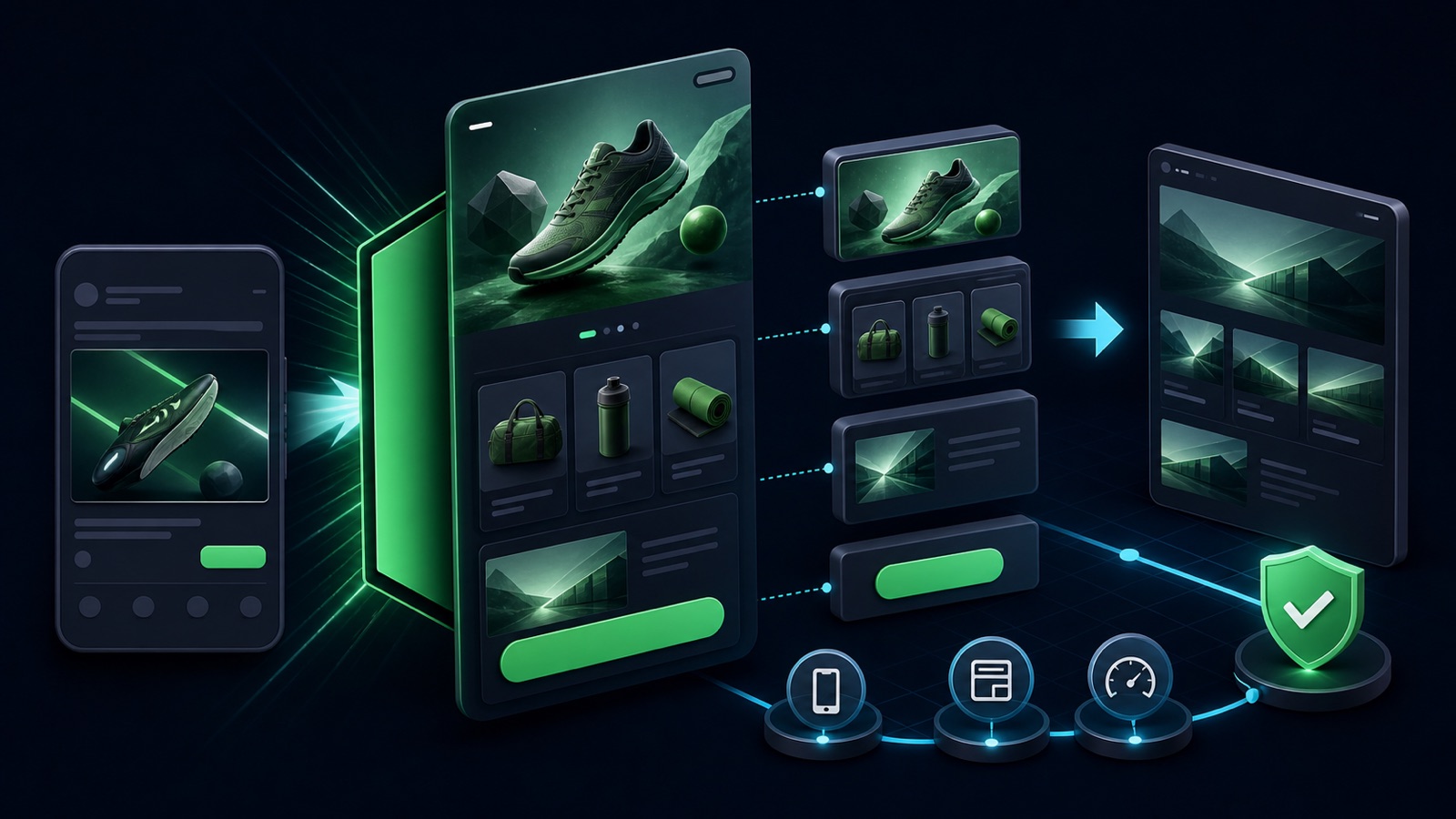
ILLUSTRATIVE WORKED EXAMPLE
Trace one illustrative post-click journey
PRACTICAL INTERFACE MAP
Plan, assemble, preview, and prove
Order the cover, context, proof, product or service choices, and final action before building.
Add approved media, copy, buttons, catalog items or URLs, then inspect the current mobile preview.
Verify destination loading, parameters, conversion events, catalog availability, and source-aware reporting.
STEP-BY-STEP LESSON
Ad promise → mobile explanation → informed choice → owned outcome
THE LEAD ATLAS METHOD
Lead Atlas Data can prepare a done-for-you business-contact list for the exact categories, locations, and market behind the Facebook campaign, giving the team a separate prospecting lane to compare with paid delivery.See how custom list research works ↗Write the post-click job
Choose one audience, one problem, one promise, and one next action. Sketch what a visitor must understand between tapping the ad and taking that action. If the answer requires unrelated offers, split the campaign or experience instead of building a mobile brochure.
Define acceptance beyond an open: a qualified visit, product view, form completion, booked call, or another owned event. Record the required disclosure, price or eligibility condition, service area, response expectation, and the person responsible after the handoff.
Storyboard the experience
Arrange components as a decision sequence: cover that repeats the ad promise, short context, credible proof, a limited set of choices, and one primary action. Use headings and visual changes to make the sequence scannable without relying on sound.
For a collection ad, confirm that the cover asset and product set tell the same story. Remove unavailable, irrelevant, or misleading items. If a catalog is not involved, give every image, carousel card, and button an explicit purpose and destination.
Build with continuity
In the current Ads Manager flow, select the approved objective, conversion location, identity, budget, audience, placements, and optimization. At the ad level, choose an eligible format and create or select the Instant Experience shown in the live interface.
Upload final assets, write concise mobile copy, add accessible contrast and captions, and connect URLs or catalog items. Preserve the same offer, naming, conditions, and visual identity from ad to canvas to destination; do not create a second surprise offer inside the experience.
Run a device-level QA pass
Open the final preview on representative phones and follow every path. Check crops, compression, text wrapping, buttons, scroll order, catalog availability, back behavior, load time, external pages, forms, checkout, phone links, and the confirmation state.
Test URL parameters and conversion events with labeled test traffic. Confirm privacy and consent behavior where applicable, source values, duplicate rules, lead routing, notifications, and the fallback when a catalog item, integration, or destination is unavailable.
Read the whole journey
Review delivery, ad taps, Instant Experience engagement, outbound visits, owned-site events, qualified outcomes, cost, value, and complaints together. An attractive canvas can increase exploration while reducing intent; interpret the path rather than celebrating a single interaction.
Deliverable: one-page campaign brief, component storyboard, approved copy and assets, product or URL map, current builder capture, final mobile previews, link-and-event test log, routing proof, source-separated scorecard, and a dated keep, repair, simplify, or retire decision.
THE TAKEAWAY
Give the Instant Experience one job, make every component advance that job, verify the mobile handoff end to end, and judge it by qualified outcomes rather than opens alone.OFFICIAL REFERENCES