A click-to-message lead ad can open Messenger or another eligible messaging destination and guide a person through automated questions. The flow is not a substitute for a clear offer or a staffed response process. It should collect only information the business can use, explain what happens next, and transfer the conversation without making the person repeat everything.
VISUAL LESSON
What you will learn
- 01Choose an appropriate messaging destination.
- 02Write a useful automated question flow.
- 03Build a tested human handoff and outcome report.
ILLUSTRATIVE WORKED EXAMPLE
Reconcile an illustrative message-ad cohort
PRACTICAL INTERFACE MAP
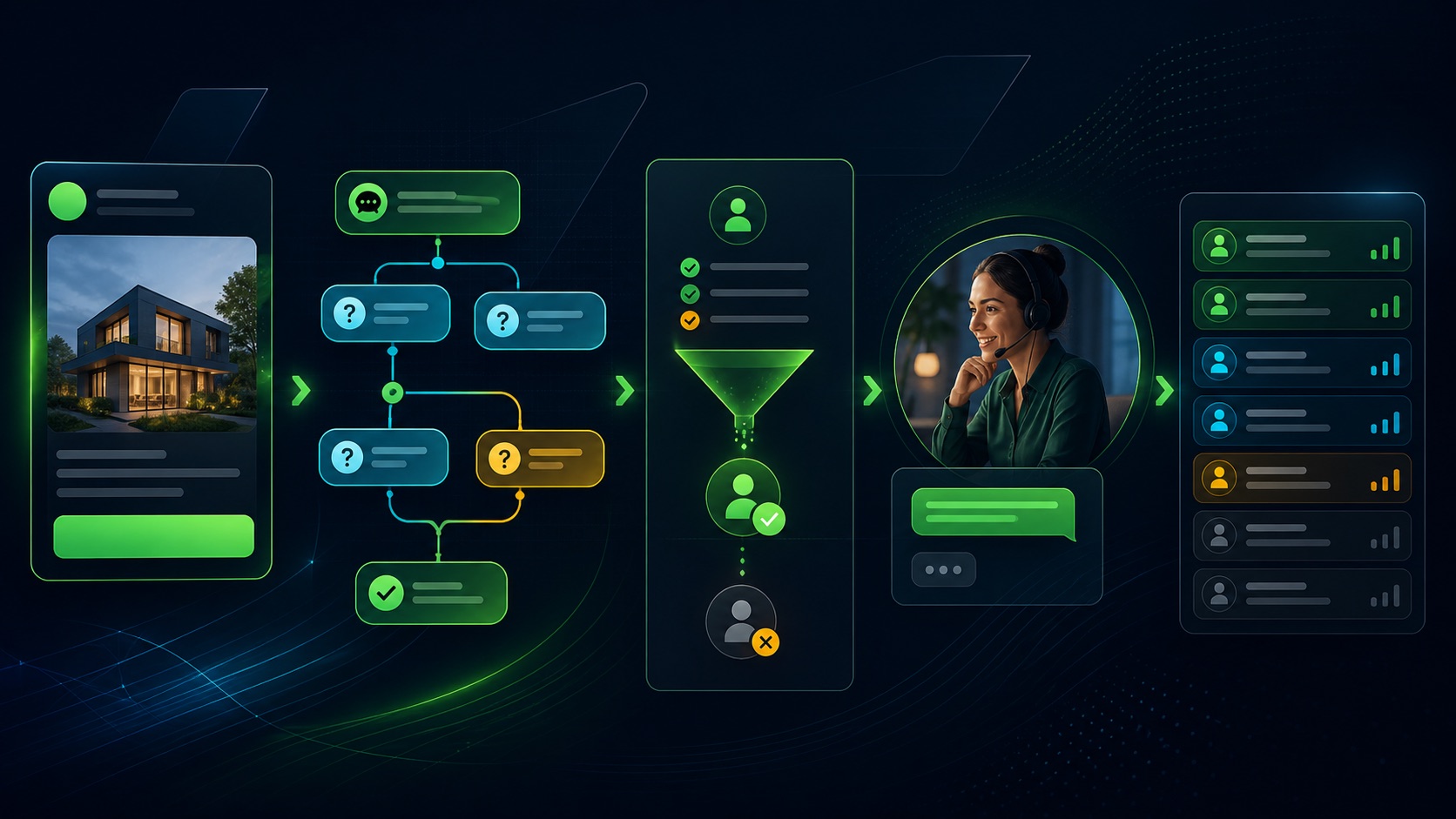
Build the message journey in Ads Manager
Confirm objective, conversion location, destination, Page identity, audience, exclusions, budget, schedule, placements, and staffing.
Continue the ad promise, ask only decision-changing questions, explain data use, offer a fallback, and state the expected response.
Assign owners, route notifications, preserve answers, test CRM retrieval where used, record outcome states, and confirm the person can reach a human.
STEP-BY-STEP LESSON
Ad promise → useful questions → human takeover → qualified outcome
THE LEAD ATLAS METHOD
Lead Atlas Data can research business contacts for the campaign’s chosen categories, locations, and market, giving the team a separate outbound cohort while message-ad conversations remain permissioned and measured on their own path.See how custom list research works ↗Define the conversation job
Write the offer, intended audience, eligible market, supported channel, qualification decision, response hours, human owner, and next useful action. Choose messaging only when a conversation can genuinely help the person decide or get service.
Do not use a chat merely to collect more fields. Separate a support request, sales inquiry, appointment, quote, and regulated or sensitive need because each requires different questions and routing.
Write a short question architecture
Open with the same promise as the ad, then ask easy, relevant questions before anything more sensitive. Give each question a purpose: route, qualify, prepare, or schedule. Remove fields that do not change the next action.
Use plain answer choices where they help, include an Other or human-help path when appropriate, and state who will respond, on which channel, and within what operating window. Avoid unsupported claims or implied approval.
Build consent, privacy, and safety into the flow
Explain why requested information is needed and link the applicable privacy notice or disclosures. Keep sensitive information out of automated chat when a secure approved path is required, and route emergencies or high-risk cases to the correct service.
A message thread does not automatically authorize unrelated marketing. Preserve opt-outs, suppression instructions, age or geography rules, and any specialist-reviewed language required for the offer.
Test every branch and human takeover
Use test accounts to open the ad, complete every response path, abandon midway, ask an unexpected question, return later, and request a person. Verify identity, notifications, assignment, transcript visibility, CRM field mapping, duplicate handling, mobile display, and business-hours behavior.
Create a recovery rule for failed automation, missing owners, duplicate threads, unsupported questions, and late responses. The first human reply should acknowledge the answers already supplied rather than restart the interview.
Report conversation quality
Measure impressions, message starts, completed flows, accepted leads, response time, disqualification reasons, next steps, sales movement, value, opt-outs, and unresolved threads with aligned dates and definitions.
Deliverable: campaign brief, destination choice, conversation map, question-purpose table, privacy review, human-handoff standard, test log, routing matrix, outcome definitions, quality report, exception owner, and next review date.
THE TAKEAWAY
Design the conversation backward from the next human action, keep qualification short and transparent, test every response branch, and reconcile completed chats with accepted leads and real follow-up.OFFICIAL REFERENCES