Within the Leads objective, Meta distinguishes maximizing the number of leads from maximizing the number of conversion leads. The second path depends on sending later CRM outcomes back through the Conversions API so delivery can learn from what qualified after submission. This is an operating-system choice, not a cosmetic dropdown.
VISUAL LESSON
What you will learn
- 01Distinguish lead and conversion-lead goals.
- 02Define a qualified downstream event.
- 03Test the CRM feedback path before launch.
ILLUSTRATIVE WORKED EXAMPLE
Illustrative 100-form cohort
PRACTICAL INTERFACE MAP
Connect the performance goal to the CRM
Decide whether the form itself or a later qualified stage is the optimization signal.
Map lead identity, stage rule, timestamp, deduplication, consent handling, and Conversions API delivery.
Reconcile forms, contactability, accepted leads, returned events, delay, and missing records.
STEP-BY-STEP LESSON
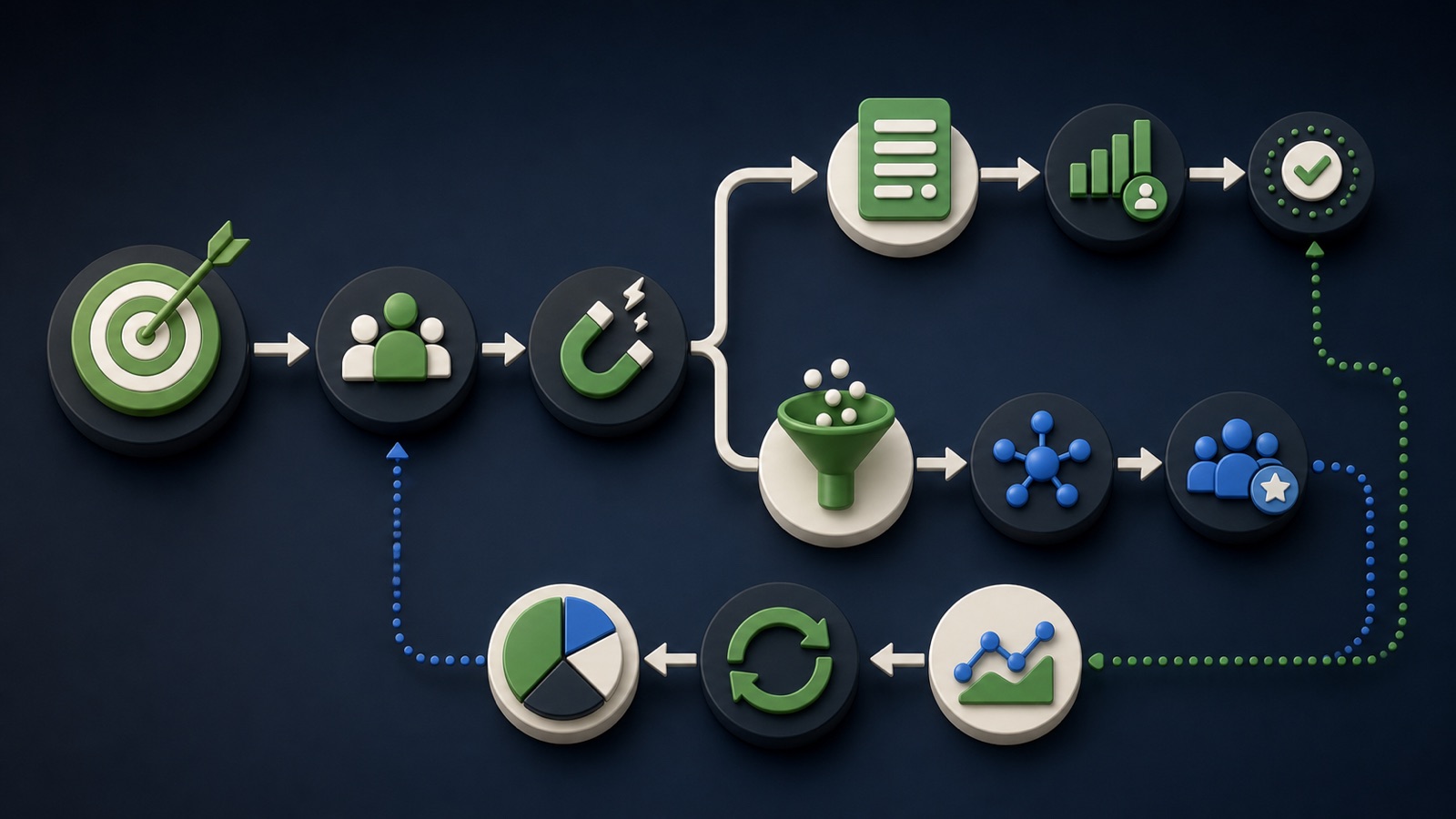
Form → qualification → event feedback → better decision
THE LEAD ATLAS METHOD
Lead Atlas Data can build a custom list of business contacts for the campaign's exact locations, categories, and market while the Facebook lead-quality feedback loop is being prepared.See how custom list research works ↗Define the business outcome
Write what must happen after a person submits: valid contact information, reachable conversation, correct market, sales acceptance, appointment, purchase, or another observable milestone. Avoid a subjective label that different reps apply differently.
Choose one event that is late enough to represent quality but early and frequent enough to return useful feedback. Document exclusions, reversals, reporting delay, and the owner of the definition.
Choose volume or conversion quality
Maximize leads is aligned to generating more lead submissions within the chosen setup. Maximize conversion leads is designed to use downstream CRM outcomes. The latter is not a guarantee of better customers and cannot learn from stages the platform never receives.
Create a decision note: optimization goal, why it matches the business, minimum customer-path readiness, budget, form type, and what evidence would justify changing the goal later.
Prepare the CRM event path
Map form identifiers to CRM records, stage transitions, event names, timestamps, and any value fields. Plan deduplication when browser, server, and CRM systems can report related actions. Follow applicable privacy and platform terms for the data you send.
Run a test lead through submission, routing, qualification, event transmission, and reporting. Record every timestamp and verify that one business event becomes one intended optimization signal.
Fix follow-up before scaling
A form optimized for volume can expose weak routing, slow response, unclear ownership, or poor qualification. Set the delivery mailbox or integration, alert, first-response owner, service level, status codes, and feedback deadline before increasing spend.
Audit rejected leads by reason rather than labeling all of them low quality. Separate invalid data, wrong geography, duplicate, existing customer, no current need, capacity, and missing context.
Read the cohort honestly
Compare forms, contactable leads, accepted leads, qualified outcomes, returned events, event delay, spend, and customer value. Use one defined time window and allow for the sales cycle before concluding that an optimization goal worked.
Deliverable: outcome definition, goal decision, form map, CRM stages, Conversions API event specification, test-record evidence, routing SLA, reconciliation table, rejection codes, and a keep, repair, or change decision.
THE TAKEAWAY
Use lead-volume optimization when the form submission is the real goal; use conversion-lead optimization only when qualified downstream events are defined, timely, and reliably returned.OFFICIAL REFERENCES