Discovered—currently not indexed generally indicates that Google knows about a URL but has not crawled it yet. It is not automatically a penalty. Large numbers of duplicative, parameterized, low-value, or weakly linked URLs can dilute crawl signals, while slow or unreliable servers can make crawling harder. The solution begins at the site-pattern level.
VISUAL LESSON
What you will learn
- 01Interpret discovered status at URL-pattern level.
- 02Audit crawl waste and server reliability.
- 03Create a prioritized crawl-recovery plan.
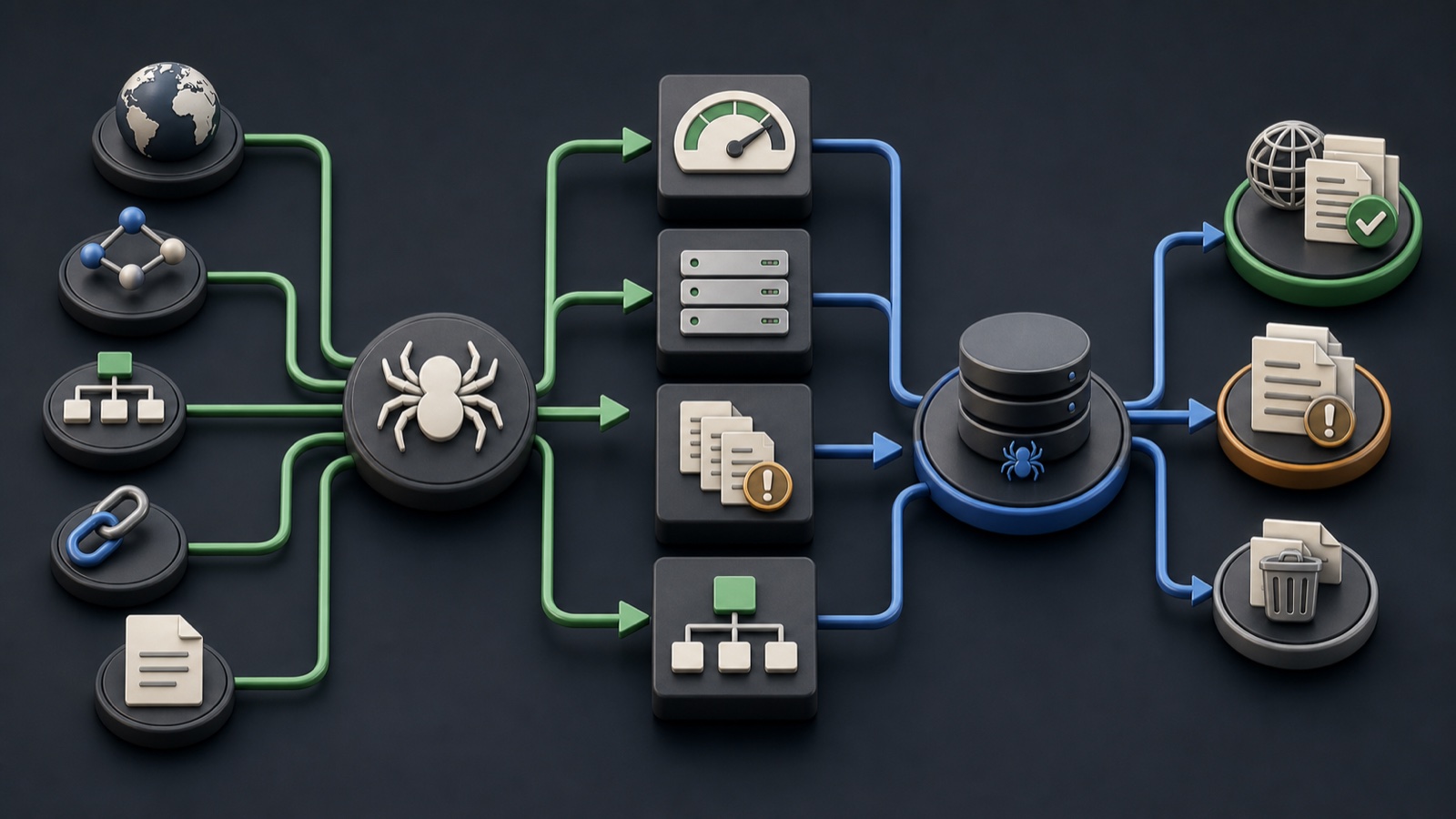
ILLUSTRATIVE WORKED EXAMPLE
Classify an illustrative discovered URL set
PRACTICAL INTERFACE MAP
Diagnose discovery from pattern to representative URL
Separate canonical pages, parameters, faceted paths, pagination, feeds, staging URLs, and generated templates.
Improve purpose, hubs, contextual links, canonical signals, sitemap inclusion, and server response for the priority set.
Review representative URLs, server logs where available, crawl stats, sitemap results, and report delay after changes.
STEP-BY-STEP LESSON
URL patterns → crawl priority → server proof → monitoring
THE LEAD ATLAS METHOD
Lead Atlas Data can prepare contacts specific to a customer’s campaign, business categories, locations, and market while the organic team resolves crawl discovery and site-capacity issues.See how custom list research works ↗Group URLs by pattern
Export affected URLs and classify canonical content, filters, parameters, internal search, pagination, feeds, alternate formats, staging paths, location templates, and other generated variants. A pattern diagnosis is more useful than random individual requests.
For each group, record count, intended purpose, internal links, sitemap presence, canonical behavior, response status, and whether users can reach it through normal navigation.
Choose the crawl-worthy set
Keep pages with a distinct user purpose, sufficient evidence, stable canonical URL, and a place in site architecture. Consolidate, block, remove, or avoid generating paths that exist only because combinations are technically possible.
Write a keep, improve, consolidate, redirect, noindex, or remove decision for each pattern. Verify the chosen control fits the real behavior; robots blocking does not remove an already indexed URL by itself.
Improve discovery signals
Link priority pages from relevant hubs and contextual content, keep canonical signals consistent, and include intended canonical URLs in the sitemap. Avoid relying on a sitemap as the only discovery path for an important page.
Create a crawl path from the homepage or a strong category hub to representative priority URLs. Check anchor text, navigation depth, orphan status, and whether links resolve without scripts or authentication.
Inspect server and crawl capacity
Review availability, response times, 5xx errors, throttling, redirect chains, DNS or CDN incidents, and crawl activity in logs where available. Large bursts of newly generated URLs can compete with the pages the business actually wants crawled.
Compare representative Googlebot requests with server health and deployment timelines. Fix reliability before submitting more URLs, and rate-limit new page generation to the team's quality and monitoring capacity.
Monitor representative recovery
Inspect a sample from each URL pattern, track crawl dates, server logs, sitemap processing, Page Indexing status, and report lag. Request indexing only for a few corrected priority pages, not every variant.
Deliverable: URL-pattern inventory, crawl-worthy decision table, canonical and sitemap audit, internal-link path, server-health review, representative inspection sample, request log, and monitoring window.
THE TAKEAWAY
Prioritize the canonical URLs that deserve crawling, reduce wasteful variants, strengthen internal discovery, and verify server and crawl evidence before requesting more URLs.OFFICIAL REFERENCES