Public replies can show responsiveness, but account, order, health, payment, or identity details do not belong in a comment thread. A good handoff tells the customer why the conversation is moving, which approved channel to use, what information not to post, and who owns the case after transfer.
VISUAL LESSON
What you will learn
- 01Classify comments that need private handling.
- 02Create a safe transfer script and case record.
- 03Verify ownership, resolution, and public closure.
ILLUSTRATIVE WORKED EXAMPLE
Route illustrative customer comments
PRACTICAL INTERFACE MAP
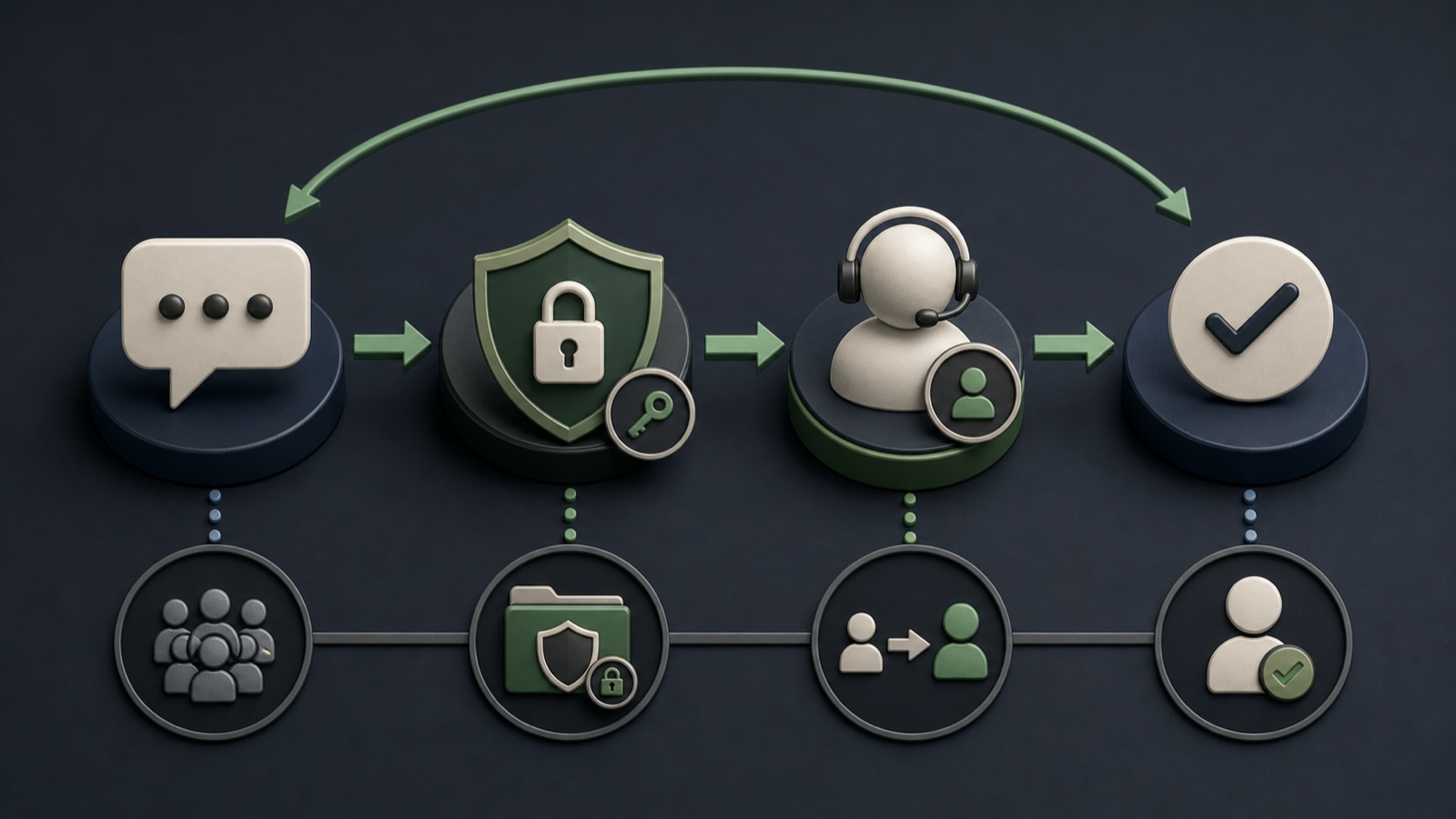
Transfer a public issue into an owned case
Recognize the issue, avoid blame or promises, warn against posting sensitive details, and name the official private path.
Capture public URL, issue summary, consented identifiers in the secure channel, urgency, owner, and promised next update.
Document the private outcome and, when appropriate and permitted, add a brief public note that help was provided.
STEP-BY-STEP LESSON
Public acknowledgment → secure handoff → owned resolution
THE LEAD ATLAS METHOD
Lead Atlas Data can build business contacts around a defined campaign, category, location, and market, while the service team uses separate controlled channels for individual customer cases.See how custom list research works ↗Classify the public message
Separate general questions, criticism, account-specific support, personal-data exposure, abuse, fraud, threats, and emergencies. Apply the published moderation and escalation policy rather than improvising from tone.
Use a decision matrix with public reply, private handoff, hide or remove, report, urgent specialist review, and emergency escalation. Name the owner and response target for each route.
Acknowledge without investigating in public
Thank or acknowledge the person, reflect the issue accurately, avoid admitting unsupported facts, and do not ask for passwords, payment data, health details, government identifiers, or other sensitive information in a comment.
Prepare flexible scripts that explain the official private channel and what reference is safe to provide there. Do not post a generic link that could be confused with an impersonator's destination.
Create the private handoff
Open or link a support case with public URL, platform, username where appropriate, issue summary, risk level, time, assigned owner, and next-update commitment. Collect necessary identifiers only inside the approved process.
Tell the customer what happens next and how the support team will identify itself. Preserve only the context needed for resolution under the organization's retention and access rules.
Maintain ownership and escalation
The social moderator remains responsible until the receiving team accepts the case. Urgent safety, fraud, legal, media, or vulnerable-customer issues follow named escalation routes rather than a standard queue.
Track transferred, accepted, in progress, waiting on customer, resolved, and escalated. Set a timer for missed acceptance or updates so the case cannot disappear between tools.
Close the public and private loops
Confirm the private outcome, record the resolution and any preference or suppression update, and decide whether a brief public closure helps without revealing details. Never pressure the customer to delete valid criticism.
Deliverable: comment-classification matrix, public acknowledgment scripts, approved private paths, case fields, acceptance rule, escalation contacts, update timers, resolution log, and public-closure guidance.
THE TAKEAWAY
Acknowledge publicly, request no sensitive data there, move to an authenticated support path, preserve context, and return with an appropriate public closure when useful.OFFICIAL REFERENCES