Impostor profiles can copy a business name, logo, employee images, offers, and customer conversations. Facebook and Instagram provide impersonation-reporting paths, including business or organization reports. A strong response preserves evidence, verifies the official account remains secure, reports through the correct platform workflow, warns customers through owned channels, and monitors for variants.
VISUAL LESSON
What you will learn
- 01Create a defensible evidence package for an impostor account.
- 02Coordinate platform reporting, security, and customer communications.
- 03Build a monitoring log for variants and closure.
ILLUSTRATIVE INCIDENT QUEUE
Prioritize by customer harm, not follower count alone
INCIDENT-RESPONSE BOARD
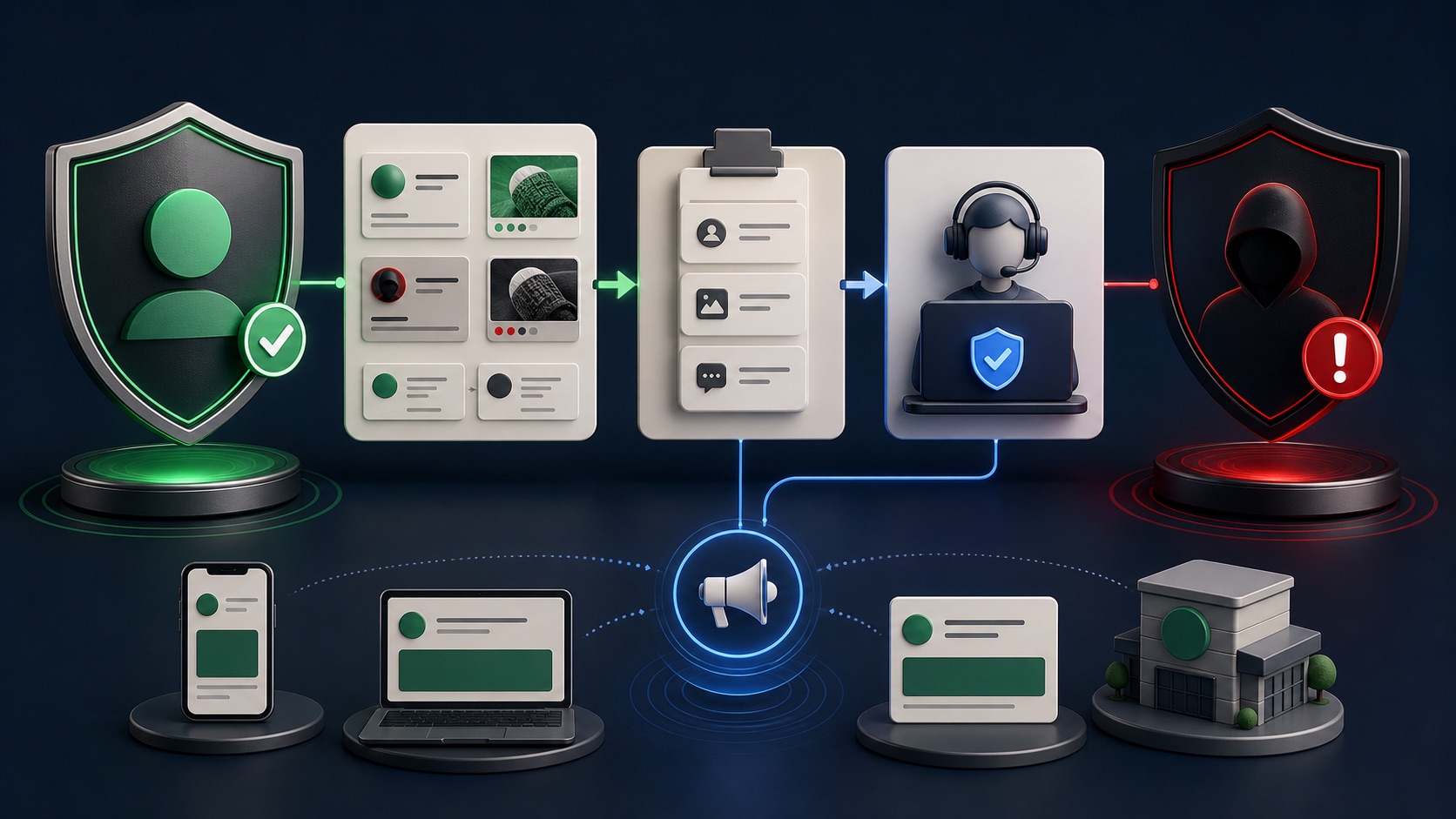
Run one coordinated case
Save profile and post URLs, usernames, screenshots, dates, messages, payment requests, affected customers, and the discoverer's account.
Use the platform impersonation path, review official account access and sessions, notify security, and escalate domain, payment, or law-enforcement issues as appropriate.
State the official handles, what the business will never request, where to report contact, and when the notice will be updated.
THE IMPERSONATION RESPONSE
Evidence → report → customer warning → monitor
THE LEAD ATLAS METHOD
When a brand-safety incident changes the priority market for legitimate outreach, Lead Atlas Data can research business contacts specific to the verified campaign, locations, and categories without relying on the impostor account's audience.See how custom list research works ↗Verify and preserve evidence
Confirm that the account is not an authorized regional, employee, partner, or campaign account. Capture full URLs, usernames, profile details, posts, messages, dates, follower context, and any customer reports before content changes.
Store evidence in a restricted incident record. Do not ask customers to send passwords, payment details, or other sensitive information as proof.
Assess customer harm
Look for direct messages, fake support, job offers, giveaways, payment requests, credential links, cloned products, and claims that customers must act urgently. Prioritize observed harm over cosmetic similarity alone.
Escalate immediately when money, credentials, personal data, threats, or account compromise are involved. Bring in security, legal, payments, customer support, and leadership according to the incident plan.
Report through official paths
Use the current impersonation-reporting flow for the platform and preserve the confirmation or case number. Submit accurate authorization and identity information when requested.
If the scam uses a domain, payment account, marketplace listing, or ad, report those components separately to the relevant provider. A social-platform report may not remove the rest of the infrastructure.
Warn without amplifying
Publish a concise notice from the verified website, email, support center, and official social accounts. List official handles and explain what the business will never request.
Avoid repeatedly linking to the impostor or reposting sensational screenshots. Give customers a safe reporting route and update the notice when facts change.
Monitor and close the case
Search name variants, common misspellings, copied biographies, profile images, campaign phrases, and customer reports. Track each account, URL, report date, status, harm signal, and owner.
Deliverable: evidence archive, severity rating, platform case numbers, security checks, owned-channel notice, customer-support script, variant watchlist, closure criteria, and post-incident improvements.
THE TAKEAWAY
Capture evidence first, coordinate security and communications, use official reporting paths, publish one calm verification message, and track every impersonator variant to closure.OFFICIAL REFERENCES