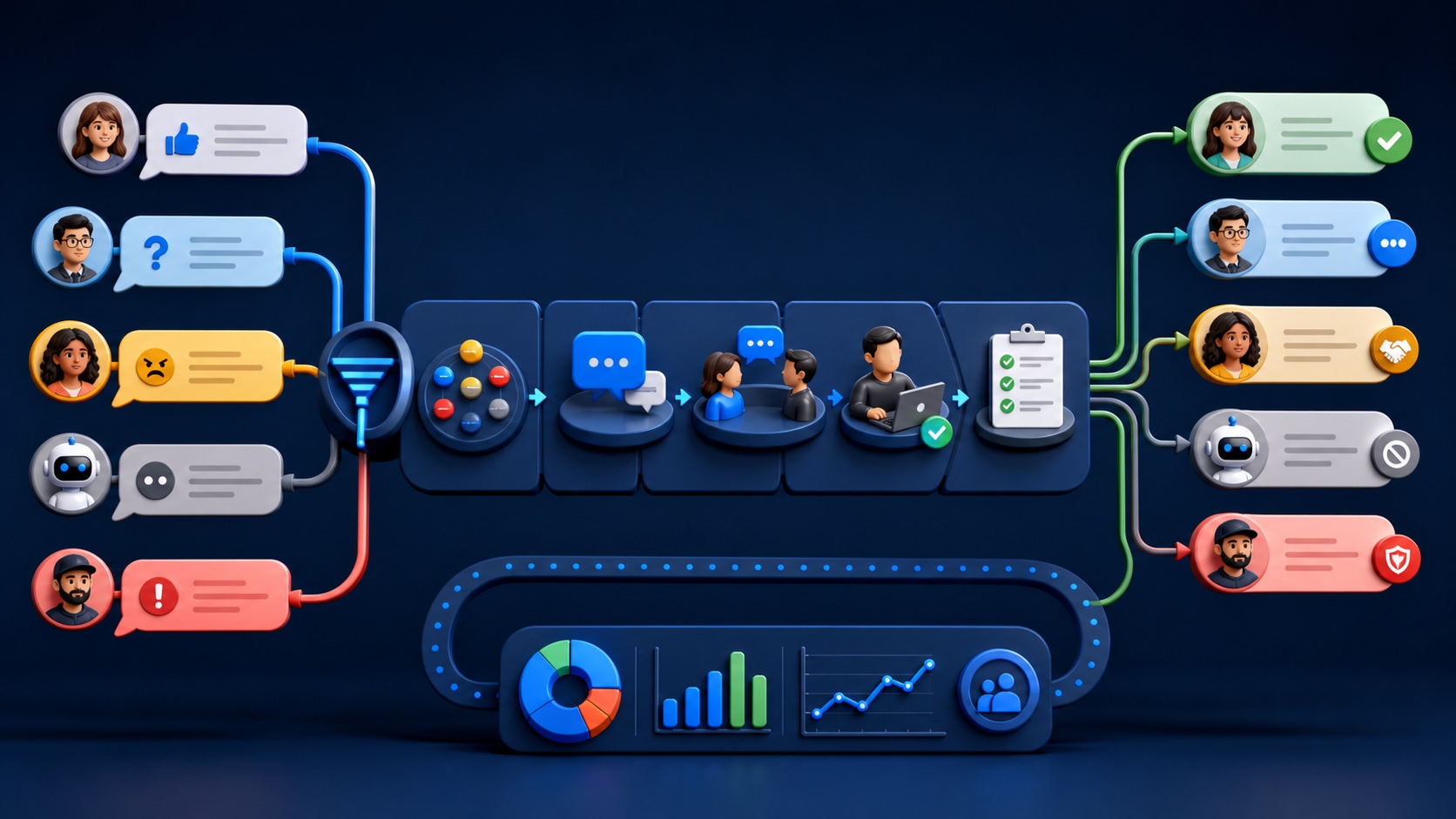
A comment section is both a public service desk and a source of customer language. The safest workflow classifies the message, assigns urgency and ownership, responds publicly when useful, moves private details into an appropriate channel, and records the outcome. The goal is not to turn every comment into a sales pitch; it is to help the person and create a trustworthy path when a real conversation belongs next.
VISUAL LESSON
What you will learn
- 01Classify comments by intent, risk, and urgency.
- 02Choose public response, private follow-up, moderation, or escalation.
- 03Capture themes and business outcomes without over-attributing sales.
ILLUSTRATIVE WEEK OF 80 COMMENTS
Most comments need clarity; a few need escalation
INBOX INTERFACE MAP
Process each message through the same four fields
Tag praise, question, complaint, purchase interest, support, spam, threat, or regulated issue and assign urgency.
Answer publicly when useful, invite private context when needed, or moderate only under a documented policy.
Route to a named owner, preserve context, record resolution, and feed repeated questions into content or operations.
THE RESPONSE SYSTEM
Triage, answer, route, learn
THE LEAD ATLAS METHOD
For teams that need proactive reach in addition to social response, Lead Atlas Data can supply business contacts researched for the customer’s specific campaign, market, locations, and categories while social conversations remain a separately attributed inbound source.See how custom list research works ↗Classify before composing
Identify intent, factual complexity, emotion, privacy risk, urgency, and the team that can resolve the issue. A product question and a safety allegation should not share a response template.
Use a short controlled taxonomy so the team can act quickly while preserving room for human judgment.
Answer in public when the answer helps others
Acknowledge the person, answer the actual question, correct important facts calmly, and link to a useful next step only when it genuinely helps. Avoid canned friendliness that ignores the substance.
Do not ask for account numbers, addresses, medical information, or other private details in public comments.
Move private context without hiding the issue
Invite a direct message, support form, phone call, or secure channel when resolution requires personal information. State what information is needed and who will respond.
When a public concern is resolved privately, consider a brief public closure that confirms follow-up without exposing details. Moving private should not be a tactic to erase legitimate criticism.
Moderate and escalate consistently
Document rules for spam, impersonation, harassment, threats, illegal content, repeated disruption, and platform-policy violations. Preserve relevant evidence and involve legal, safety, compliance, or leadership when the situation requires it.
Disagreement and negative feedback are not automatically abuse. Apply the same policy regardless of whether the comment is flattering.
Turn conversations into operating insight
Track theme, response time, resolution, owner, sentiment shift, qualified inquiry, and recurring product or service gaps. Use the language people repeat to improve FAQs, ads, landing pages, and training.
Exercise: classify ten recent comments independently with a teammate, compare differences, and write one rule that would make the next review faster and fairer.
THE TAKEAWAY
Classify before replying, solve what can be solved publicly, protect private information, assign ownership, and learn from recurring questions instead of chasing comment volume.OFFICIAL REFERENCES