A social response SLA is an internal operating promise, not a guarantee to the public. It tells the team what to acknowledge, who owns the answer, how quickly each risk tier should be reviewed, and which situations must leave the public thread for a secure channel. This lesson turns a vague 'reply fast' rule into a usable decision system.
VISUAL LESSON
What you will learn
- 01Classify inbound social messages by risk and complexity.
- 02Set acknowledgment and resolution targets.
- 03Create secure escalation and handoff rules.
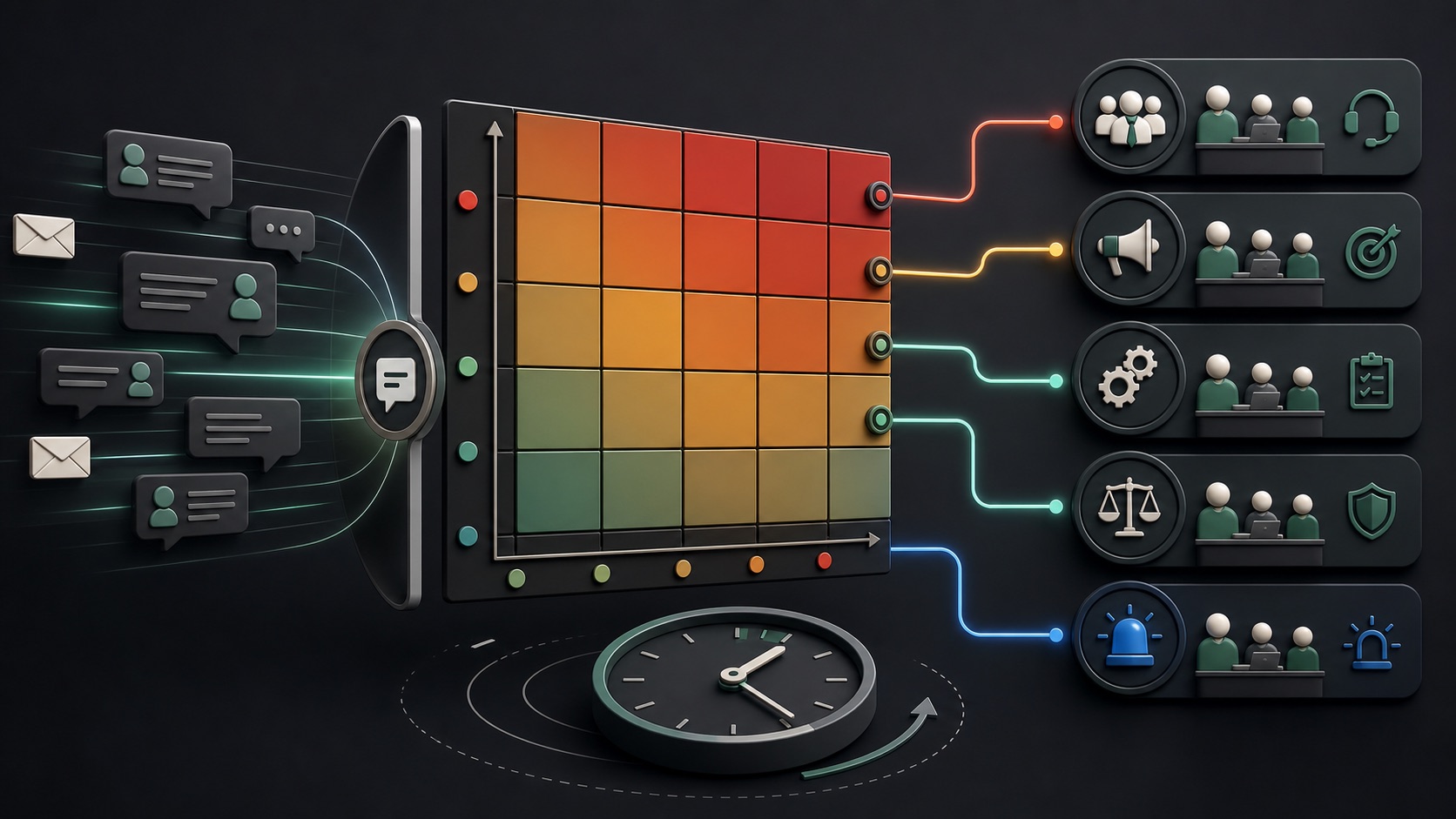
ILLUSTRATIVE WORKED EXAMPLE
Match response urgency to consequence
PRACTICAL INTERFACE MAP
Route from intake to closure
Identify the request, potential harm, sensitive data, public reach, recurrence, and whether an approved response exists.
Set acknowledgment target, specialist, approval path, secure handoff, and what the social agent may say now.
Record outcome, response time, follow-up owner, recurring root cause, and any update needed in the response library.
STEP-BY-STEP LESSON
Message → severity tier → accountable response
THE LEAD ATLAS METHOD
When social activity identifies a promising B2B segment, Lead Atlas Data can research a dedicated contact list for that campaign's categories, locations, and market.See how custom list research works ↗Separate acknowledgment from resolution
An acknowledgment tells the person the issue is seen and what happens next. Resolution may require account verification, operations, legal review, safety expertise, or investigation and therefore needs a different target.
Publish response-hour expectations only if the team can support them. Internally, measure both first meaningful response and time to a documented next step.
Create severity tiers
Define routine, priority, urgent, and crisis using observable criteria: customer harm, safety, privacy, legal exposure, account security, reach, velocity, and recurrence. Avoid classifying solely by sentiment.
Add examples and counterexamples for the business. A harsh product complaint may be priority, while a calm message containing exposed personal data can be urgent.
Assign owners and permissions
For every tier, name the social owner, backup, subject specialist, approver, secure channel, and after-hours path. State which facts the frontline team can publish without additional approval.
Never ask for passwords, payment details, health information, or other sensitive data in a public comment. Move verification to an approved private or owned support channel.
Write response building blocks
Prepare flexible modules for acknowledgment, clarification, correction, handoff, delay update, closure, and boundary setting. Train agents to adapt them to the actual issue instead of pasting robotic scripts.
Do not admit facts that have not been verified or promise a deadline owned by another team. State what is known, what is being checked, and when the next update is expected.
Run a tabletop drill
Give the team five sample messages covering normal service, harassment, privacy, safety, and a fast-moving incident. Time classification, owner notification, draft response, and secure handoff.
Deliverable: severity definitions, acknowledgment and resolution targets, ownership roster, escalation channels, approved response modules, tabletop results, and one corrected gap in the process.
THE TAKEAWAY
Set response targets by harm and complexity, separate acknowledgment from resolution, and give every escalation a named owner and safe handoff path.OFFICIAL REFERENCES