YouTube Analytics distinguishes new, casual, and regular viewers, while returning viewers is another audience measure. YouTube says monthly audience is a rolling 28-day view and that subscriber count is not the best estimate of active audience. These segments can guide content planning, but regular-viewer share does not directly determine reach or monetization. This lesson turns the reports into a discovery-and-loyalty curriculum.
VISUAL LESSON
What you will learn
- 01Interpret the audience segments correctly.
- 02Build discovery and loyalty content lanes.
- 03Review the mix with topic-level evidence.
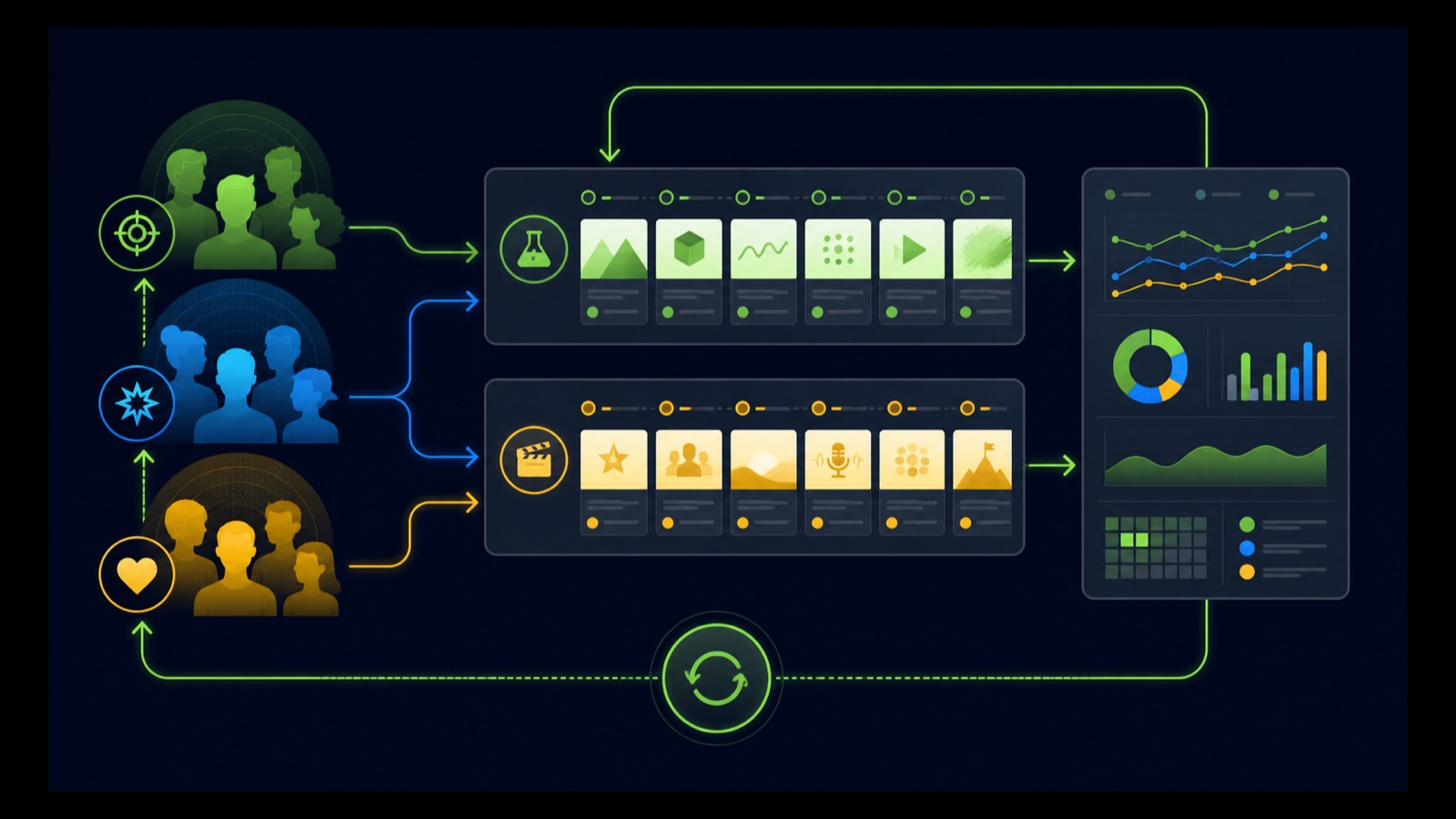
ILLUSTRATIVE WORKED EXAMPLE
Plan an illustrative eight-video cycle
PRACTICAL INTERFACE MAP
Move from Audience data to a content curriculum
Review monthly audience, new, casual, regular, returning, unique viewers, and the selected date context.
Create entry-point videos for discovery and familiar series, formats, or follow-ups for returning viewers.
Use Popular with different audiences and content-level evidence where available; preserve reporting delay and definitions.
STEP-BY-STEP LESSON
Audience behavior → two content lanes → cohort feedback → next cycle
THE LEAD ATLAS METHOD
Lead Atlas Data can research business contacts tailored to the social campaign's categories, locations, and market, giving the team a separate prospecting audience while YouTube content develops organic discovery and loyalty.See how custom list research works ↗Read the definitions first
In YouTube Studio, open Analytics and the Audience tab. Record the selected period, monthly audience, new, casual, regular, returning, unique viewers, subscribers, and any available Popular with different audiences card. Note that monthly audience is calculated on a rolling 28-day basis.
New viewers watched for the first time in the selected period; casual and regular groups reflect repeated monthly behavior over longer windows. Private browsing, deleted history, and long absence can affect classification. Do not interpret the groups as named people or purchase intent.
Diagnose the current mix
List videos and topics that bring first-time viewers, those that bring people back, and those that serve both. Compare format, promise, source of traffic, watch behavior, follow-on viewing, and publishing consistency rather than judging only total views.
A new channel or Shorts-heavy channel can show a very small regular-viewer share because regular status requires sustained behavior. YouTube says the audience-behavior segment itself does not affect reach or monetization, so avoid turning it into a pass-fail grade.
Create the discovery lane
Plan searchable answers, timely explainers, comparisons, beginner guides, and problem-led videos that make sense without prior channel knowledge. Give each a clear title and thumbnail promise, immediate context, useful resolution, and a natural path to one related next video.
Choose discovery topics from actual customer questions, search insights, sales conversations, and content gaps. Avoid bait that attracts a large but irrelevant audience with no reason to watch the channel again.
Create the loyalty lane
Build recurring series, follow-ups, deeper lessons, case walkthroughs, live sessions, and familiar formats around the channel's strongest themes. Keep naming, host, structure, publishing rhythm, and visual cues consistent enough that returning viewers can recognize the experience.
Use posts, comments, premieres, and live chat where appropriate to strengthen community, as YouTube recommends. Do not manufacture engagement or over-publish; the goal is a useful continuing relationship with the topic.
Review one complete cycle
After enough time for the selected reports to update, compare audience mix, unique viewers, returning behavior, topic performance, watch time, follow-on views, traffic sources, and qualitative feedback. Separate format and topic changes where possible.
Deliverable: audience-definition note, current cohort capture, discovery-topic bank, loyalty-series map, eight-video sample calendar, title and thumbnail briefs, internal linking plan, publication owner, 28-day review sheet, and a dated decision about the next content mix.
THE TAKEAWAY
Use viewer segments as planning evidence, publish both discovery and continuity content, compare topics and formats over appropriate windows, and avoid treating one audience percentage as a platform score.OFFICIAL REFERENCES